

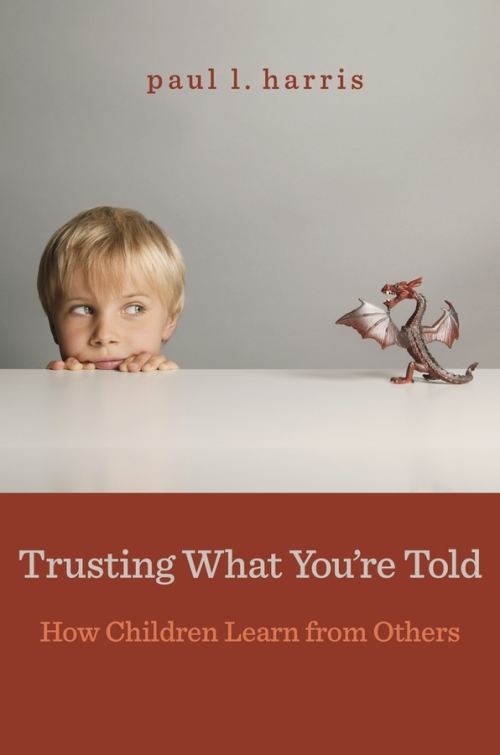
If children were little scientists who learn best through firsthand observations and mini-experiments, as conventional wisdom holds, how would a child discover that the earth is round-never mind conceive of heaven as a place someone might go after death? Overturning both cognitive and commonplace theories about how children learn, Trusting What You're Told begins by reminding us of a basic truth: Most of what we know we learned from others.
Children recognize early on that other people are an excellent source of information. And so they ask questions. But youngsters are also remarkably discriminating as they weigh the responses they elicit. And how much they trust what they are told has a lot to do with their assessment of its source. Trusting What You're Told opens a window into the moral reasoning of elementary school vegetarians, the preschooler's ability to distinguish historical narrative from fiction, and the six-year-old's nuanced stance toward magic: skeptical, while still open to miracles. Paul Harris shares striking cross-cultural findings, too, such as that children in religious communities in rural Central America resemble Bostonian children in being more confident about the existence of germs and oxygen than they are about souls and God.
We are biologically designed to learn from one another, Harris demonstrates, and this greediness for explanation marks a key difference between human beings and our primate cousins. Even Kanzi, a genius among bonobos, never uses his keyboard to ask for information: he only asks for treats.
| ISBN: | 9780674503830 |
| Publication date: | 24th March 2015 |
| Author: | Paul L Harris |
| Publisher: | The Belknap Press of Harvard University Press an imprint of Harvard University Press |
| Format: | Paperback |
| Pagination: | 253 pages |
| Genres: |
Psychology Age groups: children Child, developmental and lifespan psychology Cognition and cognitive psychology Philosophy and theory of education Primary and middle schools |
If children were little scientists who learn best through firsthand observations and mini-experiments, as conventional wisdom holds, how would a child discover that the earth is round-never mind conceive of heaven as a place someone might go after death? Overturning both cognitive and commonplace theories about how children learn, Trusting What You're Told begins by reminding us of a basic truth: Most of what we know we learned from others.Children recognize early on that other people are an excellent source of information.
Trusting What You're Told features in the following genres: Psychology, Age groups: children, Child, developmental and lifespan psychology, Cognition and cognitive psychology, Philosophy and theory of education, Primary and middle schools
Paperback. Not Available.
Trusting What You're Told was written by Paul L Harris and published by The Belknap Press of Harvard University Press an imprint of Harvard University Press
Trusting What You're Told has 253 pages