

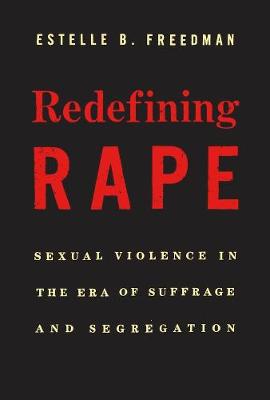
Rape has never had a universally accepted definition, and the uproar over "legitimate rape" during the 2012 U.S. elections confirms that it remains a word in flux. Redefining Rape tells the story of the forces that have shaped the meaning of sexual violence in the United States, through the experiences of accusers, assailants, and advocates for change. In this ambitious new history, Estelle Freedman demonstrates that our definition of rape has depended heavily on dynamics of political power and social privilege. The long-dominant view of rape in America envisioned a brutal attack on a chaste white woman by a male stranger, usually an African American. From the early nineteenth century, advocates for women's rights and racial justice challenged this narrow definition and the sexual and political power of white men that it sustained. Between the 1870s and the 1930s, at the height of racial segregation and lynching, and amid the campaign for woman suffrage, women's rights supporters and African American activists tried to expand understandings of rape in order to gain legal protection from coercive sexual relations, assaults by white men on black women, street harassment, and the sexual abuse of children. By redefining rape, they sought to redraw the very boundaries of citizenship. Freedman narrates the victories, defeats, and limitations of these and other reform efforts. The modern civil rights and feminist movements, she points out, continue to grapple with both the insights and the dilemmas of these first campaigns to redefine rape in American law and culture.
| ISBN: | 9780674088115 |
| Publication date: | 5th October 2015 |
| Author: | Estelle B Freedman |
| Publisher: | Harvard University Press |
| Format: | Paperback |
| Pagination: | 416 pages |
| Genres: |
Social and cultural history Sexual abuse and harassment History of the Americas |
Rape has never had a universally accepted definition, and the uproar over "legitimate rape" during the 2012 U.S. elections confirms that it remains a word in flux. Redefining Rape tells the story of the forces that have shaped the meaning of sexual violence in the United States, through the experiences of accusers, assailants, and advocates for change. In this ambitious new history, Estelle Freedman demonstrates that our definition of rape has depended heavily on dynamics of political power and social privilege. The long-dominant view of rape in America envisioned a brutal attack on a chaste white woman by a male stranger, usually an African American. From the early nineteenth century, advocates for women's rights and racial justice challenged this narrow definition and the sexual and political power of white men that it sustained. Between the 1870s and the 1930s, at the height of racial segregation and lynching, and amid the campaign for woman suffrage, women's rights supporters and African American activists tried to expand understandings of rape in order to gain legal protection from coercive sexual relations, assaults by white men on black women, street harassment, and the sexual abuse of children. By redefining rape, they sought to redraw the very boundaries of citizenship. Freedman narrates the victories, defeats, and limitations of these and other reform efforts. The modern civil rights and feminist movements, she points out, continue to grapple with both the insights and the dilemmas of these first campaigns to redefine rape in American law and culture.
Redefining Rape features in the following genres: Social and cultural history, Sexual abuse and harassment, History of the Americas
Redefining Rape is available in Paperback, Ebook
Redefining Rape was written by Estelle B Freedman and published by Harvard University Press
Redefining Rape has 416 pages