

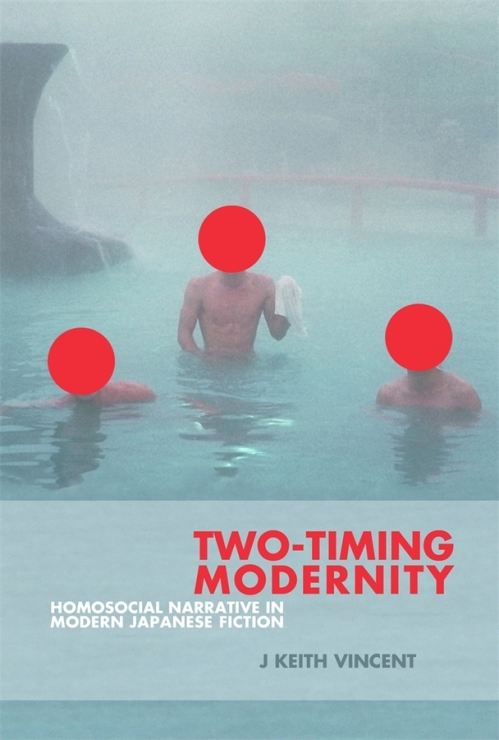
Until the late nineteenth century, Japan could boast of an elaborate cultural tradition surrounding the love and desire that men felt for other men. By the first years of the twentieth century, however, as heterosexuality became associated with an enlightened modernity, love between men was increasingly branded as "feudal" or immature. The resulting rupture in what has been called the "male homosocial continuum" constitutes one of the most significant markers of Japan's entrance into modernity. And yet, just as early Japanese modernity often seemed haunted by remnants of the premodern past, the nation's newly heteronormative culture was unable and perhaps unwilling to expunge completely the recent memory of a male homosocial past now read as perverse.
Two-Timing Modernity integrates queer, feminist, and narratological approaches to show how key works by Japanese male authors-Mori Ogai, Natsume Soseki, Hamao Shiro, and Mishima Yukio-encompassed both a straight future and a queer past by employing new narrative techniques to stage tensions between two forms of temporality: the forward-looking time of modernization and normative development, and the "perverse" time of nostalgia, recursion, and repetition.
| ISBN: | 9780674067127 |
| Publication date: | 4th December 2012 |
| Author: | Keith Vincent |
| Publisher: | Harvard University Asia Center an imprint of Harvard University Press |
| Format: | Hardback |
| Pagination: | 248 pages |
| Series: | Harvard East Asian Monographs |
| Genres: |
Geography |
Until the late nineteenth century, Japan could boast of an elaborate cultural tradition surrounding the love and desire that men felt for other men. By the first years of the twentieth century, however, as heterosexuality became associated with an enlightened modernity, love between men was increasingly branded as "feudal" or immature.
Two-Timing Modernity features in the following genres: Geography
Hardback. Not Available.
Two-Timing Modernity was written by Keith Vincent and published by Harvard University Asia Center an imprint of Harvard University Press
Two-Timing Modernity has 248 pages
Yes it is part of Harvard East Asian Monographs series