

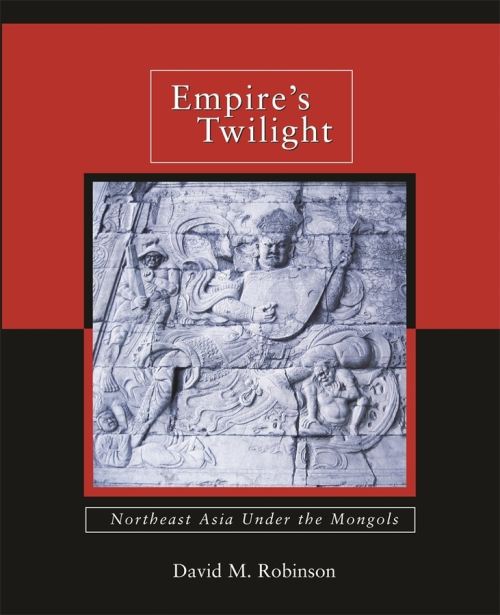
The rise of the Mongol empire transformed world history. Its collapse in the mid-fourteenth century had equally profound consequences. Four themes dominate this study of the late Mongol empire in Northeast Asia during this chaotic era: the need for a regional perspective encompassing all states and ethnic groups in the area; the process and consequences of pan-Asian integration under the Mongols; the tendency for individual and family interests to trump those of dynasty, country, or linguistic affiliation; and finally, the need to see Koryo Korea as part of the wider Mongol empire.
Northeast Asia was an important part of the Mongol empire, and developments there are fundamental to understanding both the nature of the Mongol empire and the new post-empire world emerging in the 1350s and 1360s. In Northeast Asia, Jurchen, Mongol, Chinese, Korean, and Japanese interests intersected, and the collapse of the Great Yuan reshaped Northeast Asia dramatically. To understand this transition, or series of transitions, the author argues, one cannot examine states in isolation. The period witnessed intensified interactions among neighboring polities and new regional levels of economic, political, military, and social integration that explain the importance of personal and family interests and of Korea in the Mongol state.
| ISBN: | 9780674036086 |
| Publication date: | 22nd January 2010 |
| Author: | David M Robinson |
| Publisher: | Harvard University Asia Center an imprint of Harvard University Press |
| Format: | Hardback |
| Pagination: | 439 pages |
| Series: | Harvard-Yenching Institute Monograph Series |
| Genres: |
Geography |
The rise of the Mongol empire transformed world history. Its collapse in the mid-fourteenth century had equally profound consequences.
Empire's Twilight features in the following genres: Geography
Hardback. Not Available.
Empire's Twilight was written by David M Robinson and published by Harvard University Asia Center an imprint of Harvard University Press
Empire's Twilight has 439 pages
Yes it is part of Harvard-Yenching Institute Monograph Series series