

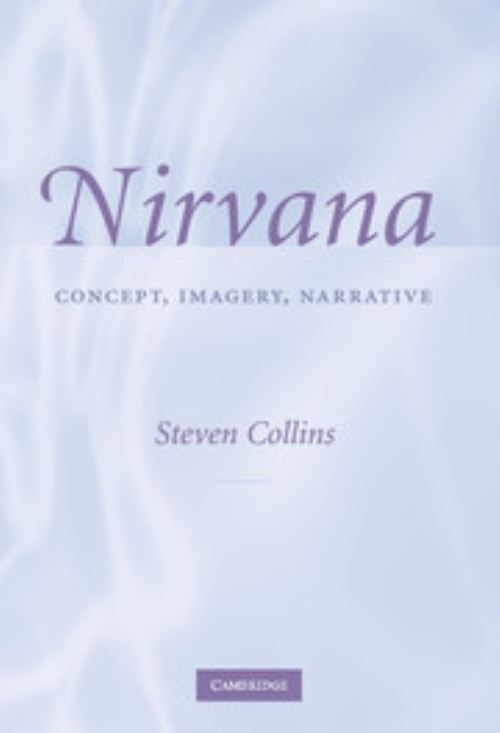
The idea of nirvana (Pali nibbana) is alluring but elusive for non-specialists and specialists alike. Offering his own interpretation of key texts, Steven Collins explains the idea in a new, accessible way - as a concept, as an image (metaphor), and as an element in the process of narrating both linear and cyclical time. Exploring nirvana from literary and philosophical perspectives, he argues that it has a specific role: to provide 'the sense of an ending' in both the systematic and the narrative thought of the Pali imaginaire.
Translations from a number of texts, including some dealing with past and future Buddhas, enable the reader to access source material directly. This book will be essential reading for students of Buddhism, but will also have much to teach anyone concerned with Asia and its religions, or indeed anyone with an interest in the ideas of eternal life or timelessness.
| ISBN: | 9780521881982 |
| Publication date: | 25th March 2010 |
| Author: | Steven Collins |
| Publisher: | Cambridge University Press |
| Format: | Hardback |
| Pagination: | 197 pages |
| Genres: |
Buddhism |
The idea of nirvana (Pali nibbana) is alluring but elusive for non-specialists and specialists alike. Offering his own interpretation of key texts, Steven Collins explains the idea in a new, accessible way - as a concept, as an image (metaphor), and as an element in the process of narrating both linear and cyclical time.
Nirvana features in the following genres: Buddhism
Ebook, Hardback. Not Available.
Nirvana was written by Steven Collins and published by Cambridge University Press
Nirvana has 197 pages