

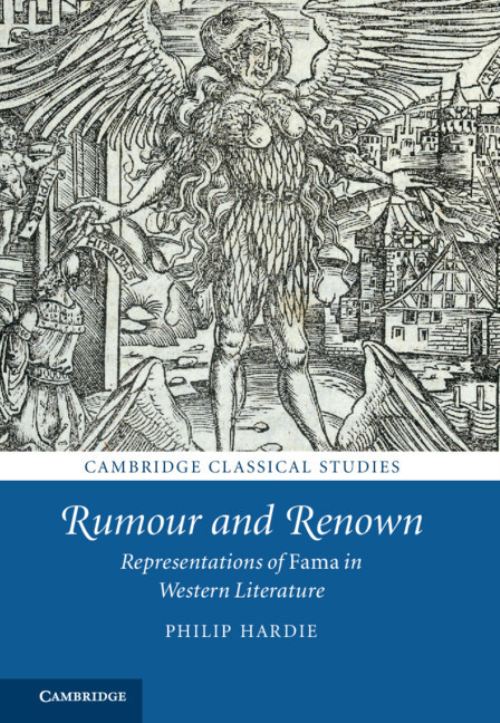
The Latin word fama means 'rumour', 'report', 'tradition', as well as modern English 'fame' or 'renown'. This magisterial and groundbreaking study in the literary and cultural history of rumour and renown, by one of the most influential living critics of Latin poetry, examines the intricate dynamics of their representations from Homer to Alexander Pope, with a focus on the power struggles played out within attempts to control the word, both spoken and written.
Central are the personifications of Fama in Virgil and Ovid and the rich progeny spawned by them, but the book focuses on a wide range of genres other than epic, and on a variety of modes of narrating, dramatising, critiquing and illustrating fama. Authors given detailed readings include Livy, Tacitus, Petrarch, Chaucer, Spenser, Shakespeare, Ben Jonson and Milton.
| ISBN: | 9780521620888 |
| Publication date: | 2nd February 2012 |
| Author: | Philip R Hardie |
| Publisher: | Cambridge University Press |
| Format: | Hardback |
| Pagination: | 693 pages |
| Series: | Cambridge Classical Studies |
| Genres: |
Literary studies: ancient, classical and medieval |
The Latin word fama means 'rumour', 'report', 'tradition', as well as modern English 'fame' or 'renown'. This magisterial and groundbreaking study in the literary and cultural history of rumour and renown, by one of the most influential living critics of Latin poetry, examines the intricate dynamics of their representations from Homer to Alexander Pope, with a focus on the power struggles played out within attempts to control the word, both spoken and written.
Rumour and Renown features in the following genres: Literary studies: ancient, classical and medieval
Hardback. Not Available.
Rumour and Renown was written by Philip R Hardie and published by Cambridge University Press
Rumour and Renown has 693 pages
Yes it is part of Cambridge Classical Studies series