

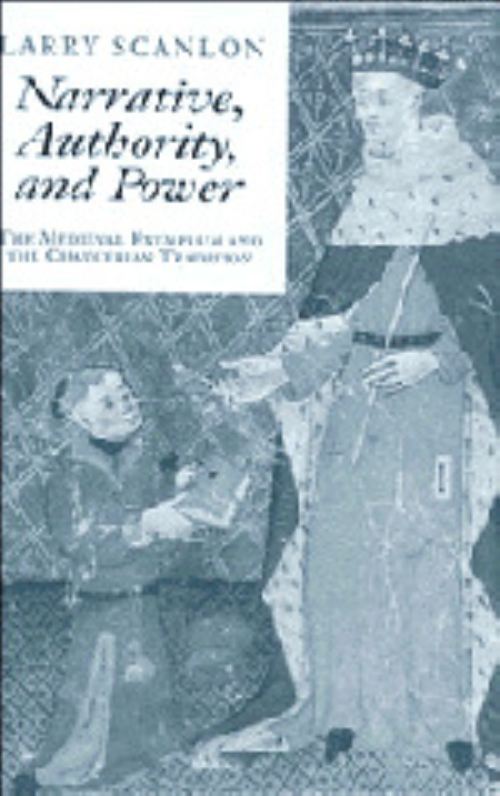
Little attention has been paid to the political and ideological significance of the exemplum, a brief narrative form used to illustrate a moral. Through a study of four major works in the Chaucerian tradition (The Canterbury Tales, John Gower's Confessio Amantis, Thomas Hoccleve's Regement of Princes, and Lydgate's Fall of Princes), Scanlon redefines the exemplum as a 'narrative enactment of cultural authority'. He traces its development through the two strands of the medieval Latin tradition which the Chaucerians appropriate: the sermon exemplum, and the public exemplum of the Mirrors of Princes.
In so doing, he reveals how Chaucer and his successors used these two forms of exemplum to explore the differences between clerical authority and lay power, and to establish the moral and cultural authority of their emergent vernacular tradition.
| ISBN: | 9780521432108 |
| Publication date: | 11th August 1994 |
| Author: | Larry Scanlon |
| Publisher: | Cambridge University Press |
| Format: | Hardback |
| Pagination: | 378 pages |
| Series: | Cambridge Studies in Medieval Literature |
| Genres: |
Literature: history and criticism |
Little attention has been paid to the political and ideological significance of the exemplum, a brief narrative form used to illustrate a moral. Through a study of four major works in the Chaucerian tradition (The Canterbury Tales, John Gower's Confessio Amantis, Thomas Hoccleve's Regement of Princes, and Lydgate's Fall of Princes), Scanlon redefines the exemplum as a 'narrative enactment of cultural authority'.
Narrative, Authority, and Power features in the following genres: Literature: history and criticism
Paperback, Hardback. Not Available.
Narrative, Authority, and Power was written by Larry Scanlon and published by Cambridge University Press
Narrative, Authority, and Power has 378 pages
Yes it is part of Cambridge Studies in Medieval Literature series