

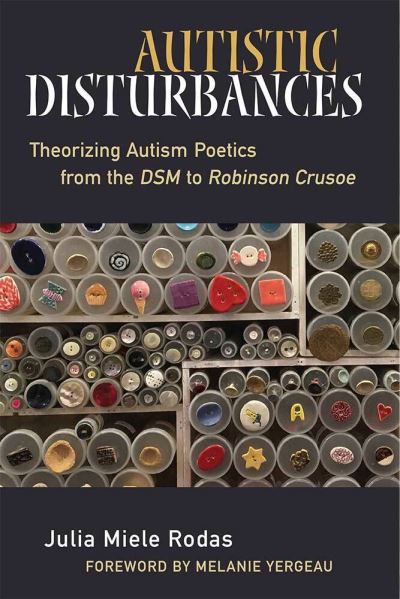
While research on autism has sometimes focused on special talents or abilities, autism is typically characterized as impoverished or defective when it comes to language. Autistic Disturbances reveals the ways interpreters have failed to register the real creative valence of autistic language and offers a theoretical framework for understanding the distinctive aesthetics of autistic rhetoric and semiotics. Reinterpreting characteristic autistic verbal practices such as repetition in the context of a more widely respected literary canon, Julia Miele Rodas argues that autistic language is actually an essential part of mainstream literary aesthetics, visible in poetry by Walt Whitman and Gertrude Stein, in novels by Charlotte Brontë and Daniel Defoe, in life writing by Andy Warhol, and even in writing by figures from popular culture. Autistic Disturbances pursues these resonances and explores the tensions of language and culture that lead to the classification of some verbal expression as disordered while other, similar expression enjoys prized status as literature. It identifies the most characteristic patterns of autistic expression-repetition, monologue, ejaculation, verbal ordering or list-making, and neologism-and adopts new language to describe and reimagine these categories in aesthetically productive terms. In so doing, the book seeks to redress the place of verbal autistic language, to argue for the value and complexity of autistic ways of speaking, and to invite recognition of an obscured tradition of literary autism at the very center of Anglo-American text culture.
| ISBN: | 9780472073948 |
| Publication date: | 3rd August 2018 |
| Author: | Julia Miele Rodas |
| Publisher: | The University of Michigan Press an imprint of University of Michigan Press |
| Format: | Hardback |
| Pagination: | 248 pages |
| Series: | Corporealities |
| Genres: |
Literature: history and criticism Social work Abnormal psychology |
While research on autism has sometimes focused on special talents or abilities, autism is typically characterized as impoverished or defective when it comes to language. Autistic Disturbances reveals the ways interpreters have failed to register the real creative valence of autistic language and offers a theoretical framework for understanding the distinctive aesthetics of autistic rhetoric and semiotics.
Autistic Disturbances features in the following genres: Literature: history and criticism, Social work, Abnormal psychology
Paperback, Hardback. Not Available.
Autistic Disturbances was written by Julia Miele Rodas and published by The University of Michigan Press an imprint of University of Michigan Press
Autistic Disturbances has 248 pages
Yes it is part of Corporealities series