

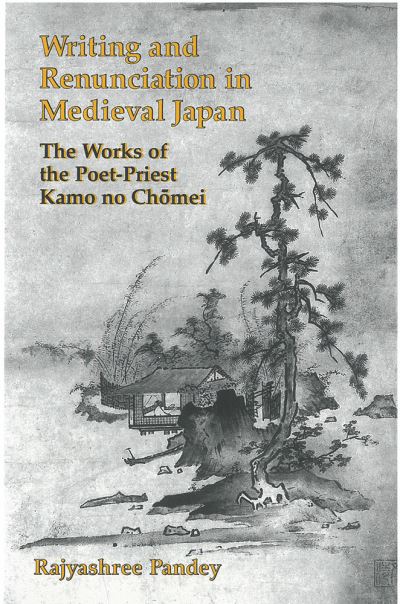
This is the first monograph-length study in English of Kamo no Chomei, one of the most important literary figures of medieval Japan. Drawing upon a wide range of writings in a variety of genres from the Heian and Kamakura periods, Pandey focuses on the terms kyogen kigo (wild words and fancy phrases), shoji soku nehan (samsara is nirvana), hoben (expedient means), and suki (single-minded devotion to an art). She shows how these terms deployed by writers in an attempt to reconcile literary and artistic activities with a commitment to Buddhism. By locating Chomei within this broad context, the book offers an original reading of his texts, while at the same time casting a light upon intellectual preoccupations that were central to the times.
Writing and Renunciation in Medieval Japan is an important contribution to a growing body of work that challenges the rigid distinction between the religious and literary-a distinction that would have made little sense to medieval writers, many of whom were poets as well as priests-and sheds light on the particular ways in which a religio-aesthetic tradition came to be articulated in medieval Japan. Through an examination of records left by Chomei's contemporaries, the book also traces the life of Chomei, particularly his activities as a court poet and the circumstances that led to his taking the tonsure.
| ISBN: | 9780472038282 |
| Publication date: | 19th January 2021 |
| Author: | Rajyashree Pandey |
| Publisher: | University of Michigan, Center for Japanese Studies an imprint of University of Michigan Press |
| Format: | Paperback |
| Pagination: | 212 pages |
| Series: | Michigan Monograph Series in Japanese Studies |
| Genres: |
Ethnic studies European history: medieval period, middle ages Religion and beliefs |
This is the first monograph-length study in English of Kamo no Chomei, one of the most important literary figures of medieval Japan. Drawing upon a wide range of writings in a variety of genres from the Heian and Kamakura periods, Pandey focuses on the terms kyogen kigo (wild words and fancy phrases), shoji soku nehan (samsara is nirvana), hoben (expedient means), and suki (single-minded devotion to an art).
Writing and Renunciation in Medieval Japan features in the following genres: Ethnic studies, European history: medieval period, middle ages, Religion and beliefs
Paperback, Hardback. Not Available.
Writing and Renunciation in Medieval Japan was written by Rajyashree Pandey and published by University of Michigan, Center for Japanese Studies an imprint of University of Michigan Press
Writing and Renunciation in Medieval Japan has 212 pages
Yes it is part of Michigan Monograph Series in Japanese Studies series