

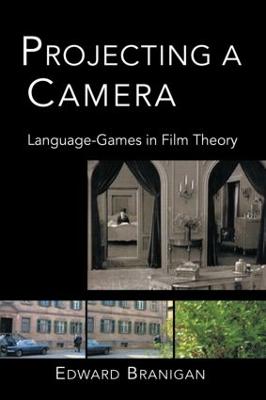
In Projecting a Camera, film theorist Edward Branigan offers a groundbreaking approach to understanding film theory. Why, for example, does a camera move? What does a camera "know"? (And when does it know it?) What is the camera's relation to the subject during long static shots?
What happens when the screen is blank? Through a wide-ranging engagement with Wittgenstein and theorists of film, he offers one of the most fully developed understandings of the ways in which the camera operates in film. With its thorough grounding in the philosophy of spectatorship and narrative, Projecting aCamera takes the study of film to a new level.
With the care and precision that he brought to NarrativeComprehension and Film, Edward Branigan maps the ways in which we must understand the role of the camera, the meaning of the frame, the role of the spectator, and other key components of film-viewing. By analyzing how we think, discuss, and marvel about the films we see, Projecting a Camera, offers insights rich in implications for our understanding of film and film studies.
| ISBN: | 9780415942546 |
| Publication date: | 13th January 2006 |
| Author: | Edward Branigan |
| Publisher: | Routledge an imprint of Taylor & Francis Ltd |
| Format: | Paperback |
| Pagination: | 456 pages |
| Genres: |
History Media studies |
In Projecting a Camera, film theorist Edward Branigan offers a groundbreaking approach to understanding film theory. Why, for example, does a camera move?
Projecting a Camera features in the following genres: History, Media studies
Ebook, Hardback, Paperback. £35.99, down from the £39.99 cover price. Not Available.
Projecting a Camera was written by Edward Branigan and published by Routledge an imprint of Taylor & Francis Ltd
Projecting a Camera has 456 pages
£35.99, reduced from £39.99. Not Available.