

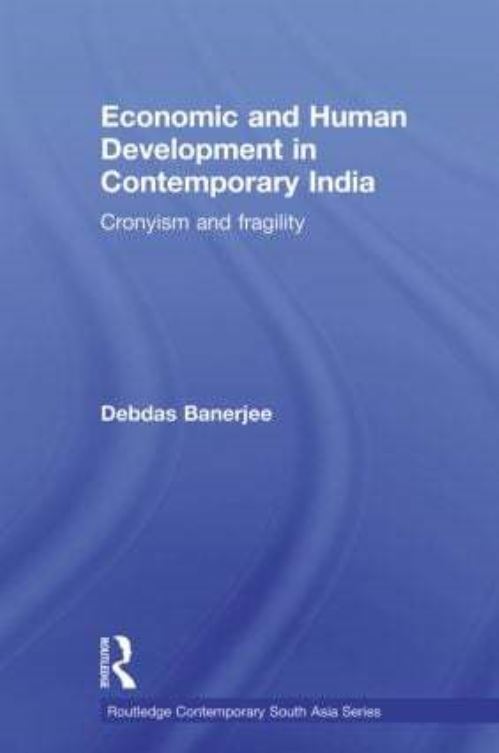
This book deals with issues in economic development in India. It highlights those factors that are indicative of India's emergence in the global economy yet indicates negative "trickle down" effects, such as malnutrition, poverty, bonded labourers, high adult unemployment and the widespread use of child labour.
Focusing on structural deficiencies for a steady growth rate, and how to make growth inclusive, the book examines duality in development and the factors standing between national economic prosperity and human development. The author analyses issues concerning international trade, technology, access to food, inequality and poverty, and the "catching up" of developing countries. A novel approach to the analysis of the Indian economy and other developing countries in the 21st century, this book advocates development as a form of governance.
With India as a case study, this book provides a solid framework for looking at developing economies which will be useful to policy-makers and to graduate and post-doctoral students and researchers in the areas of development studies and economics, industrialisation and structural change.
| ISBN: | 9780415502139 |
| Publication date: | 5th March 2012 |
| Author: | Debdas Banerjee |
| Publisher: | Routledge an imprint of Taylor & Francis |
| Format: | Paperback |
| Pagination: | 238 pages |
| Series: | Routledge Contemporary South Asia Series |
| Genres: |
Development economics and emerging economies Regional / International studies |
This book deals with issues in economic development in India. It highlights those factors that are indicative of India's emergence in the global economy yet indicates negative "trickle down" effects, such as malnutrition, poverty, bonded labourers, high adult unemployment and the widespread use of child labour.
Economic and Human Development in Contemporary India features in the following genres: Development economics and emerging economies, Regional / International studies
Paperback, Ebook, Hardback. £45.89, down from the £50.99 cover price. Not Available.
Economic and Human Development in Contemporary India was written by Debdas Banerjee and published by Routledge an imprint of Taylor & Francis
Economic and Human Development in Contemporary India has 238 pages
Yes it is part of Routledge Contemporary South Asia Series series
£45.89, reduced from £50.99. Not Available.