

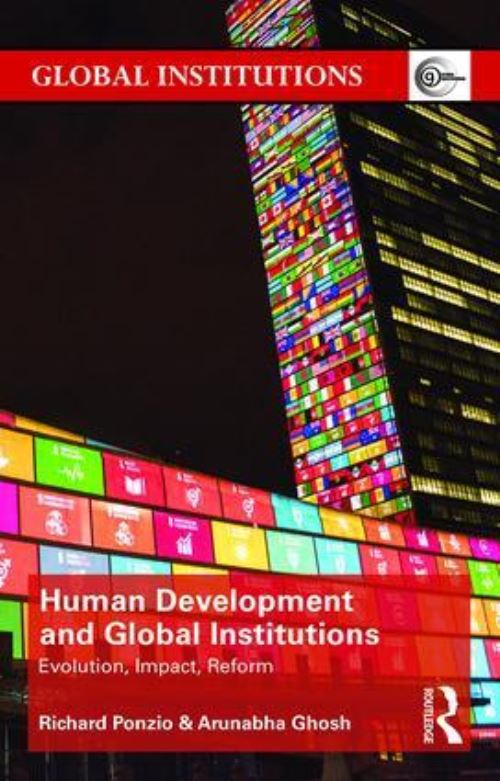
This book provides a timely and accessible introduction to the foundational ideas associated with the human development school of thought. It examines its conceptual evolution during the post-colonial era, and discusses how various institutions of the UN system have tried to engage with this issue, both in terms of intellectual and technical advance, and operationally. Showing that human development has had a profound impact on shaping the policy agenda and programming priorities of global institutions, it argues that human development has helped to preserve the continued vitality of major multilateral development programs, funds, and agencies.
It also details how human development faces new risks and threats, caused by political, economic, social, and environmental forces which are highlighted in a series of engaging case studies on trade, water, energy, the environment, democracy, human rights, and peacebuilding. The book also makes the case for why human development remains relevant in an increasingly globalized world, while asking whether global institutions will be able to sustain political and moral support from their member states and powerful non-state actors.
It argues that fresh new perspectives on human development are now urgently needed to fill critical gaps across borders and entire regions. A positive, forward-looking agenda for the future of global governance would have to engage with new issues such as the Sustainable Development Goals, energy transitions, resource scarcity, and expansion of democratic governance within and between nations.
Redefining the overall nature and specific characteristics of what constitutes human progress in an increasingly integrated and interdependent world, this book serves as a primer for scholars and graduate students of international relations and development. It is also relevant to scholars of economics, political science, history, sociology, and women's studies.
| ISBN: | 9780415483605 |
| Publication date: | 9th February 2016 |
| Author: | Maggie Black |
| Publisher: | Routledge an imprint of Taylor & Francis |
| Format: | Paperback |
| Pagination: | 176 pages |
| Series: | Global Institutions Series |
| Genres: |
International institutions Regional / International studies Development economics and emerging economies |
This book provides a timely and accessible introduction to the foundational ideas associated with the human development school of thought. It examines its conceptual evolution during the post-colonial era, and discusses how various institutions of the UN system have tried to engage with this issue, both in terms of intellectual and technical advance, and operationally.
Human Development features in the following genres: International institutions, Regional / International studies, Development economics and emerging economies
Paperback. £44.99, down from the £49.99 cover price. Not Available.
Human Development was written by Maggie Black and published by Routledge an imprint of Taylor & Francis
Human Development has 176 pages
Yes it is part of Global Institutions Series series
£44.99, reduced from £49.99. Not Available.