

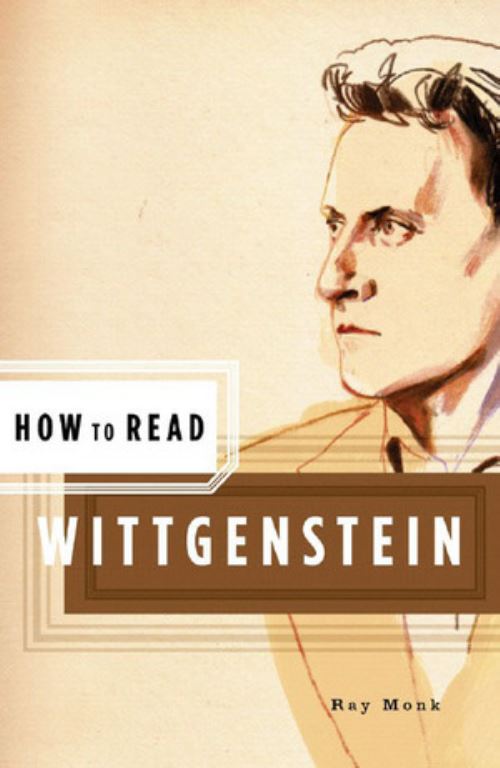
Approaching the writing of major intellectuals, artists, and philosophers need no longer be daunting. How to Read is a new sort of introduction--a personal master class in reading--that brings you face to face with the work of some of the most influential and challenging writers in history. In lucid, accessible language, these books explain essential topics such as Wittgenstein's determination to insist on the integrity and the autonomy of nonscientific forms of understanding.
Though Wittgenstein wrote on the same subjects that dominate the work of other analytic philosophers - the nature of logic, the limits of language, the analysis of meaning - he did so in a peculiarly poetic style that separates his work sharply from that of his peers and makes the question of how to read him particularly pertinent.
At the root of Wittgenstein's thought, Monk argues, is a determination to resist the scientism characteristic of our age, a determination to insist on the integrity and the autonomy of non-scientific forms of understanding. The kind of understanding we seek in philosophy, Wittgenstein tried to make clear, is similar to the kind we might seek of a person, a piece of music, or, indeed, of a poem.
| ISBN: | 9780393328202 |
| Publication date: | 14th October 2005 |
| Author: | Ray Monk |
| Publisher: | W.W. Norton and Company an imprint of W. W. Norton & Company |
| Format: | Paperback |
| Pagination: | 114 pages |
| Series: | How to Read |
| Genres: |
Stationery and miscellaneous items |
Approaching the writing of major intellectuals, artists, and philosophers need no longer be daunting. How to Read is a new sort of introduction--a personal master class in reading--that brings you face to face with the work of some of the most influential and challenging writers in history.
How to Read Wittgenstein features in the following genres: Stationery and miscellaneous items
Ebook, Paperback. Not Available.
How to Read Wittgenstein was written by Ray Monk and published by W.W. Norton and Company an imprint of W. W. Norton & Company
How to Read Wittgenstein has 114 pages
Yes it is part of How to Read series