

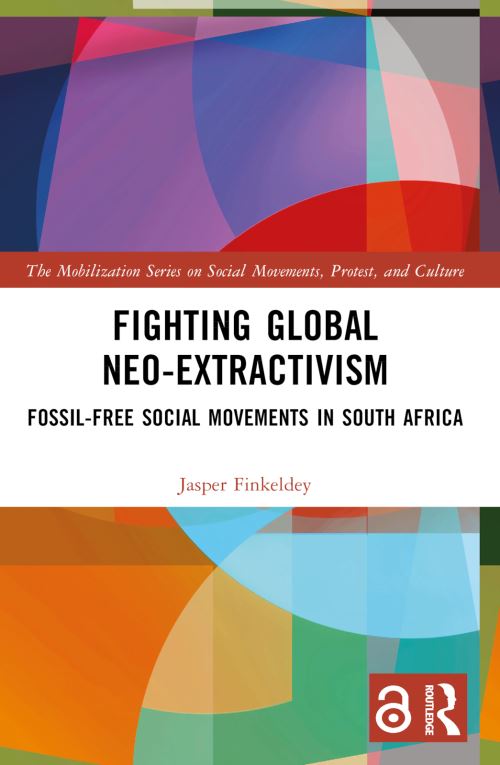
Fighting Global Neo-Extractivism: Fossil-Free Social Movements in South Africa analyzes social struggles over damaging new fossil fuel projects in the Global South with a focus on South Africa, Africa's biggest fossil fuel emitter.
Fossil fuel extraction in South Africa has reached a new accelerated phase in which the fossil fuel frontier is moving beyond historical 'sacrifice zones' into non-traditional spaces, such as conservation parks and middle-class neighbourhoods, and provoking fervent opposition from grassroots activists.
This book examines campaigns such as Frack Free South Africa and Save our iMfolozi Wilderness, viewing them as struggles against neo-extractivism driven by the state and industry. Through a series of detailed case studies, it highlights the shaping of mobilisation patterns by prior land use practices and the capacity to mobilize different social groups across race and class.
Developing the notion of the fossil fuel frontier as the material and political boundary that activists in South Africa and elsewhere in the world render visible, this volume provides a theoretical framework to understanding global mobilization patterns.
This timely and impassioned book will appeal to students and researchers interested in a range of subjects, including environmentalism, social movements, political ecology, and development studies.
| ISBN: | 9780367627966 |
| Publication date: | 27th May 2024 |
| Author: | Jasper Finkeldey |
| Publisher: | Routledge an imprint of Taylor & Francis |
| Format: | Paperback |
| Pagination: | 148 pages |
| Series: | The Mobilization Series on Social Movements, Protest, and Culture |
| Genres: |
Sociology Social classes Ethnic studies Political science and theory |
Fighting Global Neo-Extractivism: Fossil-Free Social Movements in South Africa analyzes social struggles over damaging new fossil fuel projects in the Global South with a focus on South Africa, Africa's biggest fossil fuel emitter.Fossil fuel extraction in South Africa has reached a new accelerated phase in which the fossil fuel frontier is moving beyond historical 'sacrifice zones' into non-traditional spaces, such as conservation parks and middle-class neighbourhoods, and provoking fervent opposition from grassroots activists. This book examines campaigns such as Frack Free South Africa and Save our iMfolozi Wilderness, viewing them as struggles against neo-extractivism driven by the state and industry.
Fighting Global Neo-Extractivism features in the following genres: Sociology, Social classes, Ethnic studies, Political science and theory
Paperback, Ebook. £39.59, down from the £43.99 cover price. Not Available.
Fighting Global Neo-Extractivism was written by Jasper Finkeldey and published by Routledge an imprint of Taylor & Francis
Fighting Global Neo-Extractivism has 148 pages
Yes it is part of The Mobilization Series on Social Movements, Protest, and Culture series
£39.59, reduced from £43.99. Not Available.