

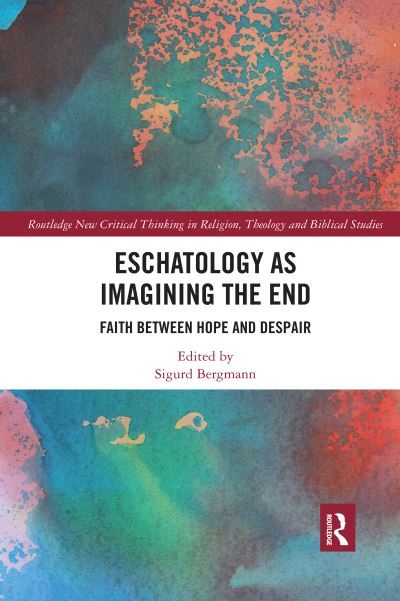
As society becomes more concerned with the future of our planet, the study of apocalypse and eschatology become increasingly pertinent. Whether religious or not, peoples' views on this topic can have a profound effect on their attitudes to issues such as climate change and social justice and so it cannot be ignored. This book investigates how different approaches in historical and contemporary Christian theology make sense in reflecting about the final things, or the eschata, and why it is so important to consider their multi-faceted impact on our lives.
A team of Nordic scholars analyse historical and contemporary eschatological thinking in a broad range of sources from theology and other related disciplines, such as moral philosophy, art history and literature. Specific social and environmental challenges, such as the Norwegian Breivik massacre in 2011, climatic change narratives and the ambiguity of discourses about euthanasia are investigated in order to demonstrate the complexity and significance of modes of thinking about the end times.
This book addresses the theology of the end of the world in a more serious academic tone than it is usually afforded. As such, it will be of great interest to academics working in eschatology, practical theology, religious studies and the philosophy of religion.
| ISBN: | 9780367589561 |
| Publication date: | 14th August 2020 |
| Author: | Sigurd Bergmann |
| Publisher: | Routledge an imprint of Taylor & Francis |
| Format: | Paperback |
| Pagination: | 188 pages |
| Series: | Routledge New Critical Thinking in Religion, Theology and Biblical Studies |
| Genres: |
Christianity Religious ethics Religion and politics Philosophy of religion Philosophy |
As society becomes more concerned with the future of our planet, the study of apocalypse and eschatology become increasingly pertinent. Whether religious or not, peoples' views on this topic can have a profound effect on their attitudes to issues such as climate change and social justice and so it cannot be ignored. This book investigates how different approaches in historical and contemporary Christian theology make sense in reflecting about the final things, or the eschata, and why it is so important to consider their multi-faceted impact on our lives.
A team of Nordic scholars analyse historical and contemporary eschatological thinking in a broad range of sources from theology and other related disciplines, such as moral philosophy, art history and literature. Specific social and environmental challenges, such as the Norwegian Breivik massacre in 2011, climatic change narratives and the ambiguity of discourses about euthanasia are investigated in order to demonstrate the complexity and significance of modes of thinking about the end times.
This book addresses the theology of the end of the world in a more serious academic tone than it is usually afforded. As such, it will be of great interest to academics working in eschatology, practical theology, religious studies and the philosophy of religion.
Eschatology as Imagining the End features in the following genres: Christianity, Religious ethics, Religion and politics, Philosophy of religion, Philosophy
Eschatology as Imagining the End is available in Paperback, Hardback
Eschatology as Imagining the End was written by Sigurd Bergmann and published by Routledge an imprint of Taylor & Francis
Eschatology as Imagining the End has 188 pages
Yes it is part of Routledge New Critical Thinking in Religion, Theology and Biblical Studies series
£43.19