

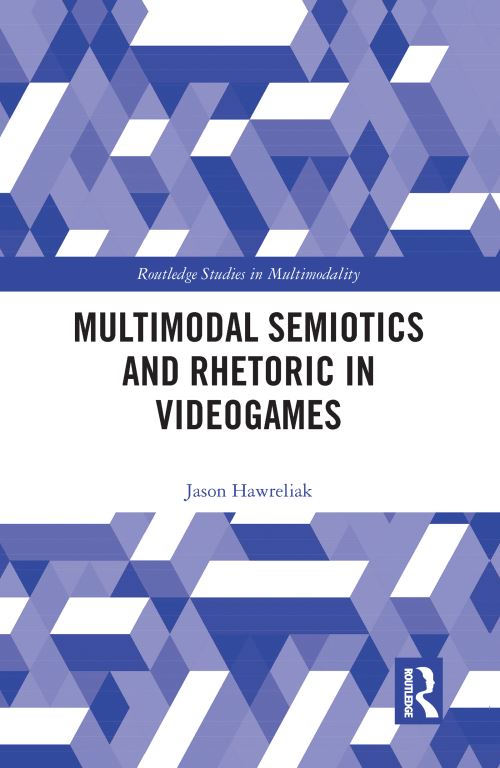
This book merges recent trends in game studies and multimodal studies to explore the relationship between the interaction between videogames' different modes and the ways in which they inform meaning for both players and designers. The volume begins by laying the foundation for integrating the two disciplines, drawing upon social semiotic and discourse analytic traditions to examine their relationship with meaning in videogames. The book uses a wide range of games as examples to demonstrate the medium's various forms of expression at work, including audio, visual, textual, haptic, and procedural modes, with a particular focus on the procedural form, which emphasizes processes and causal relationships, to better showcase its link with meaning-making. The second half of the book engages in a discussion of different multimodal configurations and user generated content to show how they contribute to the negotiation of meaning in the player experience, including their role in constructing and perpetuating persuasive messages and in driving interesting and unique player decisions in gameplay. Making the case for the benefits of multimodal approaches to game studies, this volume is key reading for students and researchers in multimodal studies, game studies, rhetoric, semiotics, and discourse analysis.
| ISBN: | 9780367584788 |
| Publication date: | 30th June 2020 |
| Author: | Jason Hawreliak |
| Publisher: | Routledge an imprint of Taylor & Francis |
| Format: | Paperback |
| Pagination: | 212 pages |
| Series: | Routledge Studies in Multimodality |
| Genres: |
Media studies Semantics, discourse analysis, stylistics Communication studies Semiotics / semiology History |
This book merges recent trends in game studies and multimodal studies to explore the relationship between the interaction between videogames' different modes and the ways in which they inform meaning for both players and designers. The volume begins by laying the foundation for integrating the two disciplines, drawing upon social semiotic and discourse analytic traditions to examine their relationship with meaning in videogames.
Multimodal Semiotics and Rhetoric in Videogames features in the following genres: Media studies, Semantics, discourse analysis, stylistics, Communication studies, Semiotics / semiology, History
Paperback, Hardback, Ebook. £43.19, down from the £47.99 cover price. Not Available.
Multimodal Semiotics and Rhetoric in Videogames was written by Jason Hawreliak and published by Routledge an imprint of Taylor & Francis
Multimodal Semiotics and Rhetoric in Videogames has 212 pages
Yes it is part of Routledge Studies in Multimodality series
£43.19, reduced from £47.99. Not Available.