

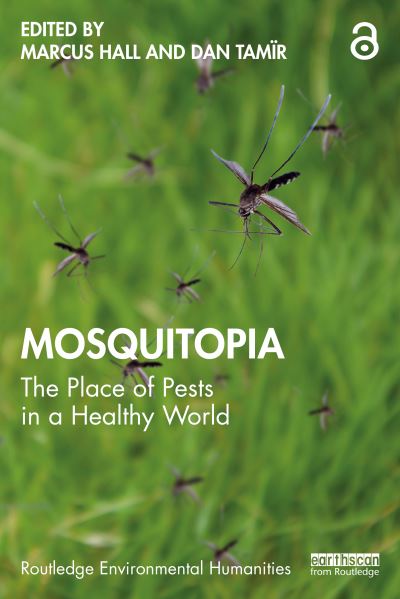
This edited volume brings together natural scientists, social scientists and humanists to assess if (or how) we may begin to coexist harmoniously with the mosquito. The mosquito is humanity's deadliest animal, killing over a million people each year by transmitting malaria, yellow fever, Zika and several other diseases. Yet of the 3,500 species of mosquito on Earth, only a few dozen of them are really dangerous-so that the question arises as to whether humans and their mosquito foe can learn to live peacefully with one another.
Chapters assess polarizing arguments for conserving and preserving mosquitoes, as well as for controlling and killing them, elaborating on possible consequences of both strategies. This book provides informed answers to the dual question: could we eliminate mosquitoes, and should we? Offering insights spanning the technical to the philosophical, this is the "go to" book for exploring humanity's many relationships with the mosquito-which becomes a journey to finding better ways to inhabit the natural world.
Mosquitopia will be of interest to anyone wanting to explore dependencies between human health and natural systems, while offering novel perspectives to health planners, medical experts, environmentalists and animal rights advocates.
The Open Access version of this book, available at
http://www.taylorfrancis.com/books/e/9781003056034, has been made available under a Creative Commons Attribution-Non Commercial-No Derivatives 4.0 license
| ISBN: | 9780367520052 |
| Publication date: | 2nd September 2021 |
| Author: | Marcus Hall, Dan Tamïr |
| Publisher: | Routledge an imprint of Taylor & Francis |
| Format: | Paperback |
| Pagination: | 290 pages |
| Series: | Routledge Environmental Humanities |
| Genres: |
Epidemiology and Medical statistics Insects (entomology) Ethics and moral philosophy |
This edited volume brings together natural scientists, social scientists and humanists to assess if (or how) we may begin to coexist harmoniously with the mosquito. The mosquito is humanity's deadliest animal, killing over a million people each year by transmitting malaria, yellow fever, Zika and several other diseases.
Mosquitopia features in the following genres: Epidemiology and Medical statistics, Insects (entomology), Ethics and moral philosophy
Paperback, Hardback. £37.79, down from the £41.99 cover price. Not Available.
Mosquitopia was written by Marcus Hall, Dan Tamïr and published by Routledge an imprint of Taylor & Francis
Mosquitopia has 290 pages
Yes it is part of Routledge Environmental Humanities series
£37.79, reduced from £41.99. Not Available.