

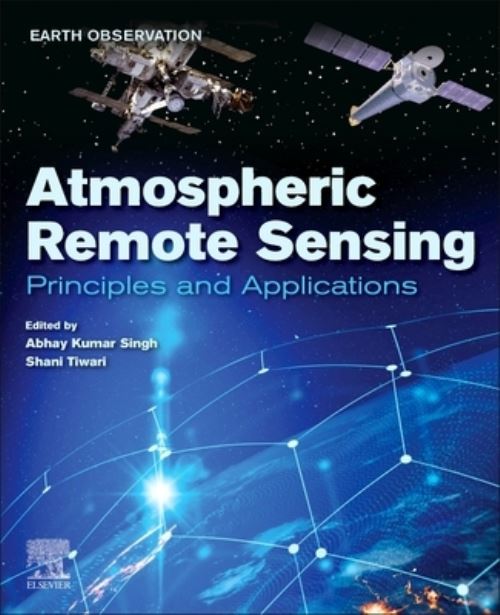
Atmospheric Remote Sensing: Principles and Applications discusses the fundamental principles of atmospheric remote sensing and their applications in different research domains. Furthermore, the book covers the basic concepts of satellite remote sensing of the atmosphere, followed by Ionospheric remote sensing tools like Global Positioning System (GPS) and Very Low Frequency (VLF) wave. Sections emphasize the applications of atmospheric remote study in Ionospheric perturbation, fire detection, aerosol characteristics over land, ocean and Himalayan regions. In addition, the application of atmospheric remote sensing in disaster management like dust storms, cyclones, smoke plume, aerosol-cloud interaction, and their impact on climate change are discussed.
This book is a valuable reference for students, researchers and professionals working in atmospheric science, remote sensing, and related disciplines.
| ISBN: | 9780323992626 |
| Publication date: | 9th November 2022 |
| Author: | |
| Publisher: | Elsevier an imprint of Elsevier Science |
| Format: | Paperback |
| Pagination: | 350 pages |
| Series: | Earth Observation |
| Genres: |
Geographical information systems, geodata and remote sensing Meteorology and climatology |
Atmospheric Remote Sensing: Principles and Applications discusses the fundamental principles of atmospheric remote sensing and their applications in different research domains. Furthermore, the book covers the basic concepts of satellite remote sensing of the atmosphere, followed by Ionospheric remote sensing tools like Global Positioning System (GPS) and Very Low Frequency (VLF) wave.
Atmospheric Remote Sensing features in the following genres: Geographical information systems, geodata and remote sensing, Meteorology and climatology
Paperback, Ebook. Not Available.
Atmospheric Remote Sensing was written by and published by Elsevier an imprint of Elsevier Science
Atmospheric Remote Sensing has 350 pages
Yes it is part of Earth Observation series