

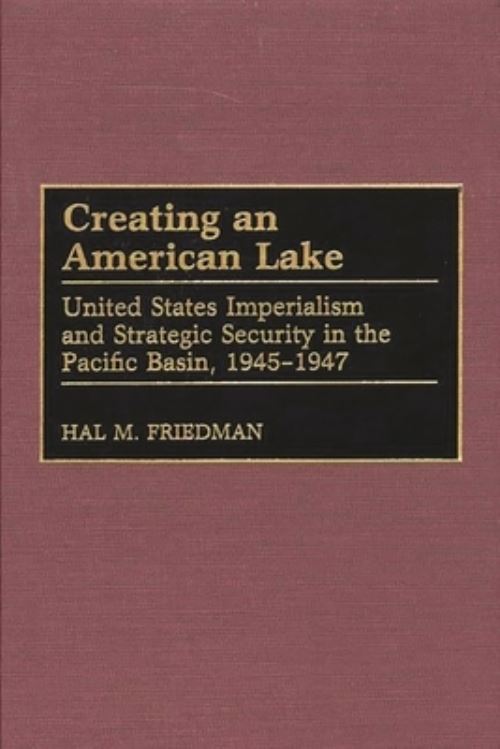
Many historians of U.S. foreign relations think of the post-World War II period as a time when the United States, as an anti-colonial power, advocated collective security through the United Nations and denounced territorial aggrandizement. Yet between 1945 and 1947, the United States violated its wartime rhetoric and instead sought an imperial solution to its postwar security problems in East Asia by acquiring unilateral control of the western Pacific Islands and dominating influence throughout the entire Pacific Basin. This detailed study examines American foreign policy from the beginning of the Truman Administration to the implementation of Containment in the summer and fall of 1947. As a case study of the Truman Administration's Early Cold War efforts, it explores pre-Containment policy in light of U.S. security concerns vis-a-vis the Pearl Harbor Syndrome.
The American pursuit of a secure Pacific Basin was inconsistent at the time with its foreign policy toward other areas of the world. Thus, the consolidation of power in this region was an exception to the avowed goal of a multilateral response to the policies of the Soviet Union. This example of national or strategic security went much further than simple military control; it included the cultural assimilation of the indigenous population and the unilateral exclusion of all other powers.
Analyzing traditional archival records in a new light, Friedman also investigates the persisting American notions of a Westward moving frontier that stretches beyond North American territorial bounds.
| ISBN: | 9780313313011 |
| Publication date: | 30th November 2000 |
| Author: | Hal M Friedman |
| Publisher: | Praeger an imprint of ABC-CLIO |
| Format: | Hardback |
| Pagination: | 219 pages |
| Series: | Contributions in Military Studies |
| Genres: |
History and Archaeology Central / national / federal government policies International relations Military and defence strategy |
Many historians of U.S. foreign relations think of the post-World War II period as a time when the United States, as an anti-colonial power, advocated collective security through the United Nations and denounced territorial aggrandizement. Yet between 1945 and 1947, the United States violated its wartime rhetoric and instead sought an imperial solution to its postwar security problems in East Asia by acquiring unilateral control of the western Pacific Islands and dominating influence throughout the entire Pacific Basin.
Creating an American Lake features in the following genres: History and Archaeology, Central / national / federal government policies, International relations, Military and defence strategy
Hardback. £67.50, down from the £75.00 cover price. Not Available.
Creating an American Lake was written by Hal M Friedman and published by Praeger an imprint of ABC-CLIO
Creating an American Lake has 219 pages
Yes it is part of Contributions in Military Studies series
£67.50, reduced from £75.00. Not Available.