

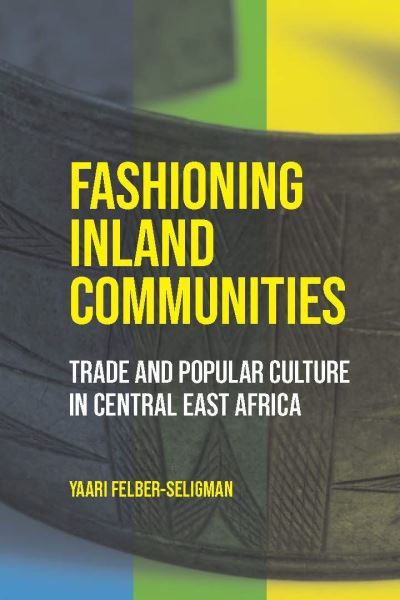
When viewed from the economic centers of the Indian or Atlantic Oceans, the Ruvuma region of East Africa, crossing what is now Tanzania, Malawi, and Mozambique, would look like a periphery. But the same factors that marginalize the region historically brought distinct opportunities. In Fashioning Inland Communities, Yaari Felber-Seligman traces the long history-from the first millennium CE into the twentieth century-of Ruvuma trade practices within a changing world.
Felber-Seligman argues that Ruvuma trade should be understood fundamentally as a set of voluntary choices undertaken and revised to further communities' aspirations.
Ruvuma used fashion to build varied communities, from local to pan-regional, reflecting the dynamic relationships among inland groups. Examples of Ruvuma popular fashions reveal processes of meaning-making and community building that call for us to expand our attention to the ways in which East African peoples interacted alongside, as well as beyond, trade networks that sourced prestige and commercial goods.
Popular culture here emerges as a heterarchical force that shaped lasting multidirectional connections across and between Ruvuma and their neighbors. As both a subject and a strategy for analysis, the history of popular fashion shifts how we view histories of small, decentralized societies as they encounter larger economies.
Felber-Seligman demonstrates that this has implications for our understanding not only of trade but of material culture, community, gender, and family.
| ISBN: | 9780299350406 |
| Publication date: | 3rd June 2025 |
| Author: | Yaari FelberSeligman |
| Publisher: | The University of Wisconsin Press an imprint of University of Wisconsin Press |
| Format: | Hardback |
| Pagination: | 336 pages |
| Series: | Africa and the Diaspora |
| Genres: |
African history Cultural studies: customs and traditions Social and cultural history |
When viewed from the economic centers of the Indian or Atlantic Oceans, the Ruvuma region of East Africa, crossing what is now Tanzania, Malawi, and Mozambique, would look like a periphery. But the same factors that marginalize the region historically brought distinct opportunities.
Fashioning Inland Communities features in the following genres: African history, Cultural studies: customs and traditions, Social and cultural history
Hardback. £64.80, down from the £72.00 cover price. Not Available.
Fashioning Inland Communities was written by Yaari FelberSeligman and published by The University of Wisconsin Press an imprint of University of Wisconsin Press
Fashioning Inland Communities has 336 pages
Yes it is part of Africa and the Diaspora series
£64.80, reduced from £72.00. Not Available.