

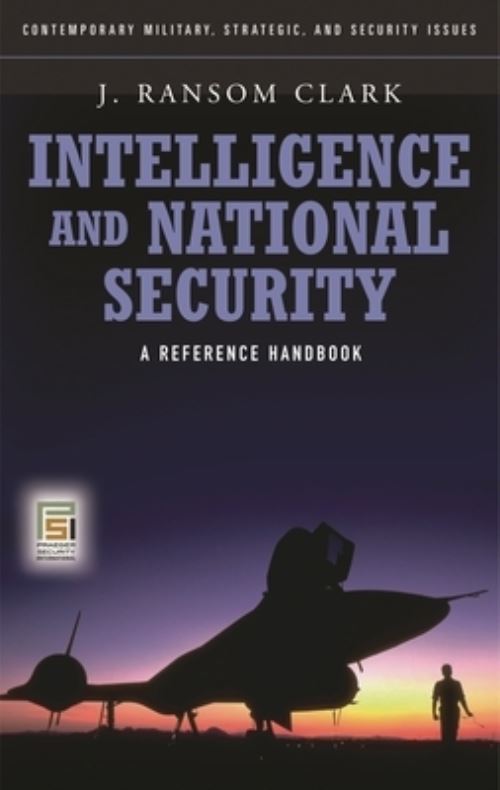
Clark presents a brief history of the creation and development of the intelligence services in the United States. He centers his examination on the two main constants in the American way of gathering, processing, analyzing, and using intelligence; change and a concern for the impact of secret activities on democratic government. Resolving the ever-growing need for informed decision making continues to put pressure on the country's ability to manage and provide oversight of intelligence. Clark assesses how those forces have resulted in ongoing changes to the intelligence apparatus in the United States. Consistent with other volumes in this series, Clark supplements his narrative with key documents and brief biographies of influential personalities within the intelligence community to further illustrate his conclusions.
Clark provides a current, explanatory text and reference work that deals with what intelligence is, what it can and cannot do, how it functions, and why it matters within the context of furthering American national security. He describes the U.S. intelligence community prior to WWII, demonstrating that intellignece gathering and espionage have played a key role in national security and warfare since the inception of the Republic.
Through their ubiquity, Clark establishes them as a necessary function of government and governmental decision making. Today, the intelligence apparatus encompasses numerous activities and organizations. They are all responsible for different parts of the practice of collecting, processing, analyzing, disseminating, and using intelligence.
With the demise of the Soviet Union in 1991, significant stresses began to appear in the U.S. approach to the intelligence process; Clark concludes by chronicling those stresses and the attendant drive for change was accelerated after the terrorist attacks of September 11, 2001.
| ISBN: | 9780275992989 |
| Publication date: | 30th August 2007 |
| Author: | J Ransom Clark |
| Publisher: | Praeger an imprint of ABC-CLIO |
| Format: | Hardback |
| Pagination: | 192 pages |
| Series: | Contemporary Military, Strategic, and Security Issues |
| Genres: |
Espionage and secret services |
Clark presents a brief history of the creation and development of the intelligence services in the United States. He centers his examination on the two main constants in the American way of gathering, processing, analyzing, and using intelligence; change and a concern for the impact of secret activities on democratic government.
Intelligence and National Security features in the following genres: Espionage and secret services
Hardback. Not Available.
Intelligence and National Security was written by J Ransom Clark and published by Praeger an imprint of ABC-CLIO
Intelligence and National Security has 192 pages
Yes it is part of Contemporary Military, Strategic, and Security Issues series