

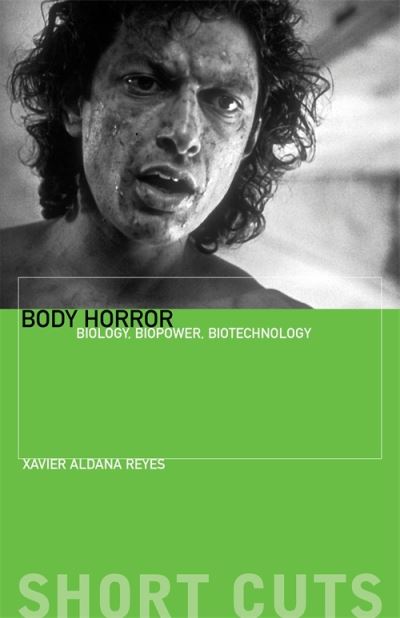
The subgenre of body horror, associated with directors such as David Cronenberg and Coralie Fargeat, depicts the human body's susceptibility to disease and change. Preoccupied with anatomy, pathology, and corporeality, it portrays contagion, mutilation, mutation, and metamorphosis. As organs, growths, and pustules proliferate, so do questions about the consequences of technology, the effects of trauma, and ultimately what it means to be human.
Since emerging in the 1970s, the subgenre has not only bridged grindhouse and arthouse but also increasingly taken on ageism, sexism, racism, and ableism.
Xavier Aldana Reyes provides an engaging introduction to the inner workings of body horror, tracing its evolution from foundational works such as The Fly (1986) and Tetsuo: The Iron Man (1989) to recent films like Raw (2016) and The Substance (2024). He argues that the subgenre's concern with the body as both anatomical reality and cultural construction links it to the interdisciplinary field of body studies, which examines the relationship between embodiment and culture.
Surveying a wide range of films, Aldana Reyes shows how the transformation of the body opens paths to resist dominant understandings of identity and to imagine alternatives. Compelling and accessible, this book offers new insights for both film studies courses and general readers interested in the role the body plays in horror cinema.
| ISBN: | 9780231220965 |
| Publication date: | 11th August 2026 |
| Author: | Xavier Aldana Reyes |
| Publisher: | Wallflower Press an imprint of Columbia University Press |
| Format: | Paperback |
| Pagination: | 168 pages |
| Series: | Short Cuts |
| Genres: |
Film: styles and genres |
The subgenre of body horror, associated with directors such as David Cronenberg and Coralie Fargeat, depicts the human body's susceptibility to disease and change. Preoccupied with anatomy, pathology, and corporeality, it portrays contagion, mutilation, mutation, and metamorphosis.
Body Horror features in the following genres: Film: styles and genres
Paperback. £16.19, down from the £17.99 cover price. Not Available.
Body Horror was written by Xavier Aldana Reyes and published by Wallflower Press an imprint of Columbia University Press
Body Horror has 168 pages
Yes it is part of Short Cuts series
£16.19, reduced from £17.99. Not Available.