

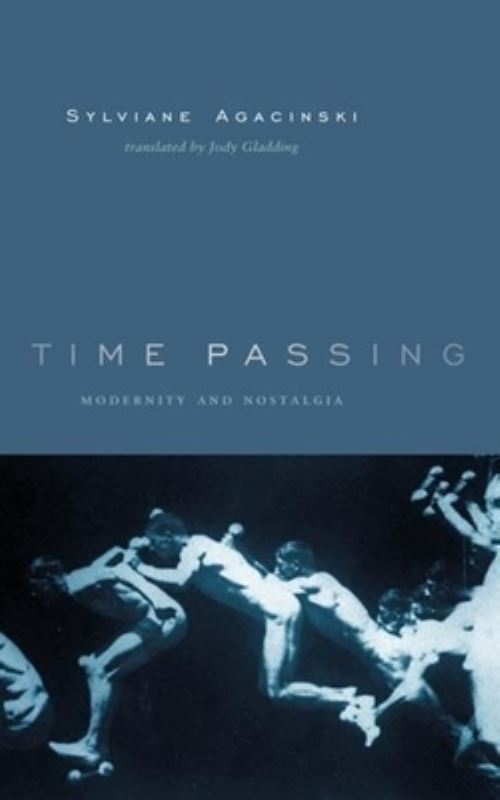
What do we mean when we say time passes? How do contingency and anachronism and other philosophical concepts bearing on time affect the more (seemingly) concrete realities of our political and cultural lives? In ways small and great, personal and cultural, we all experience the mutability of time. We feel it expand and contract, speed up and slow down, as it bends to the imperatives of memory, money, and the media.
In our own time (itself a pregnant phrase) we have witnessed a disengagement with the past even as technological advances have allowed us to capture and reproduce past time as never before. How are we to make sense of this paradox?
In this wide-ranging meditation on the meaning of time, Sylvaine Agacinski weaves together discussions of Aristotle, Kant, Hegel, Freud, Heidegger, Baudelaire, Barthes, and especially Walter Benjamin-her model for the modern "passer of time"-as she traces a time line of the philosophy of time. After examining how shifting attitudes toward the passage of time have affected everything from art criticism to the development of photography to the rise of modernism itself, Agacinski concludes by proposing a rethinking of democracy that emphasizes patience in the face of our current temporal frenzy.
| ISBN: | 9780231125147 |
| Publication date: | 11th July 2003 |
| Author: | Sylviane Agacinski |
| Publisher: | Columbia University Press |
| Format: | Hardback |
| Pagination: | 212 pages |
| Series: | European Perspectives |
| Genres: |
Philosophical traditions and schools of thought |
What do we mean when we say time passes? How do contingency and anachronism and other philosophical concepts bearing on time affect the more (seemingly) concrete realities of our political and cultural lives?
Time Passing features in the following genres: Philosophical traditions and schools of thought
Hardback. Not Available.
Time Passing was written by Sylviane Agacinski and published by Columbia University Press
Time Passing has 212 pages
Yes it is part of European Perspectives series