

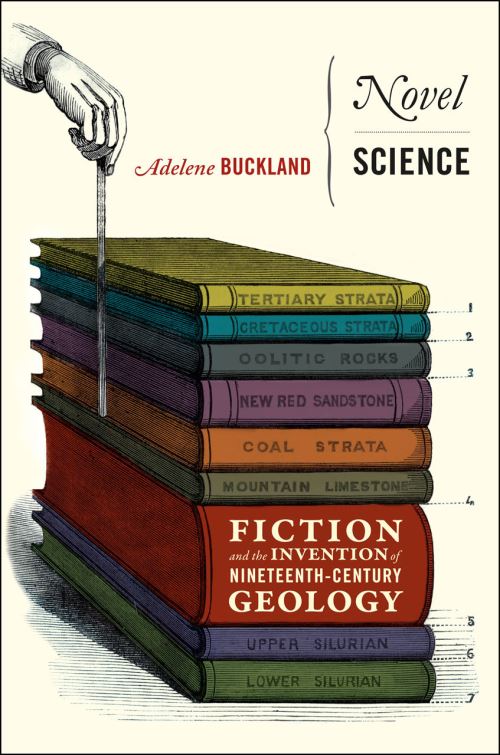
Novel Science is the first in-depth study of the shocking, groundbreaking, and sometimes beautiful writings of the gentlemen of the "heroic age" of geology and of the contribution these men made to the literary culture of their day. For these men, literature was an essential part of the practice of science itself, as important to their efforts as mapmaking, fieldwork, and observation. The reading and writing of imaginative literatures helped them to discover, imagine, debate, and give shape and meaning to millions of years of previously undiscovered earth history.
Borrowing from the historical fictions of Walter Scott and the poetry of Lord Byron, they invented geology as a science, discovered many of the creatures we now call the dinosaurs, and were the first to unravel and map the sequence and structure of stratified rock. As Adelene Buckland shows, they did this by rejecting the grand narratives of older theories of the earth or of biblical cosmogony: theirs would be a humble science, faithfully recording minute details and leaving the big picture for future generations to paint.
Buckland also reveals how these scientists-just as they had drawn inspiration from their literary predecessors-gave Victorian realist novelists such as George Eliot, Charles Kingsley, and Charles Dickens a powerful language with which to create dark and disturbing ruptures in the too-seductive sweep of story.
| ISBN: | 9780226079684 |
| Publication date: | 3rd May 2013 |
| Author: | Adelene Buckland |
| Publisher: | The University of Chicago Press an imprint of University of Chicago Press |
| Format: | Hardback |
| Pagination: | 377 pages |
| Genres: |
Literary studies: fiction, novelists and prose writers Geology, geomorphology and the lithosphere |
Novel Science is the first in-depth study of the shocking, groundbreaking, and sometimes beautiful writings of the gentlemen of the "heroic age" of geology and of the contribution these men made to the literary culture of their day. For these men, literature was an essential part of the practice of science itself, as important to their efforts as mapmaking, fieldwork, and observation.
Novel Science features in the following genres: Literary studies: fiction, novelists and prose writers, Geology, geomorphology and the lithosphere
Hardback. Not Available.
Novel Science was written by Adelene Buckland and published by The University of Chicago Press an imprint of University of Chicago Press
Novel Science has 377 pages