

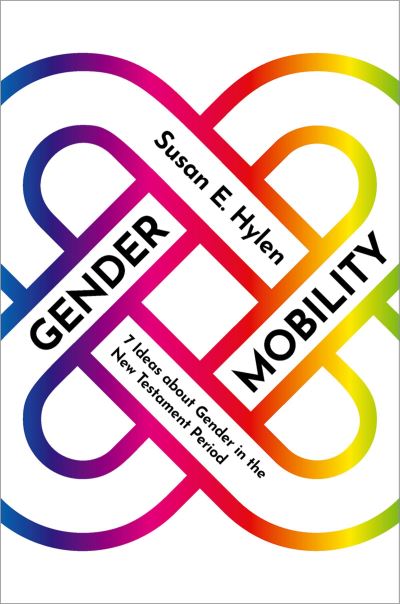
What if our long-held understandings of gender have less historical basis than we imagine? The gender norms and sexual distinctions of the first century world that produced the New Testament were not strictly binary, as we might think. Although some ancient writers did indeed contrast male and female attributes, other social norms created considerable overlap between men and women.
In Gender Mobility, Susan E. Hylen argues that the Roman gender order was definitively non-binary. She makes a compelling case that freeborn men, freeborn women, freed men, freed women, enslaved men, and enslaved women all constituted different genders.
Further, specifically non-binary genders like eunuchs held a place within Roman gender norms and systems. And the possibility that some people could change gender -- what Hylen calls "gender mobility" -- was a standard feature of the period. Hylen also shows that, for the most part, gender options were not freely chosen, and moreover that gender norms were dominated by familiar forms of oppression -- a social domination that favored freeborn men and women over other groups.
In this way, Hylen redirects our contemporary thinking about gender roles to the ancient past, while simultaneously opening our imaginations to other ways that societies have constructed gender. This thought-provoking book serves our own current moment as we continue to debate gender norms and the institutions that maintain them.
| ISBN: | 9780197797334 |
| Publication date: | 16th August 2025 |
| Author: | Susan Hylen |
| Publisher: | Oxford University Press an imprint of OUP USA |
| Format: | Paperback |
| Pagination: | 174 pages |
| Genres: |
Old Testaments Religious aspects of sexuality, gender and relationships Religious issues and debates |
What if our long-held understandings of gender have less historical basis than we imagine? The gender norms and sexual distinctions of the first century world that produced the New Testament were not strictly binary, as we might think.
Gender Mobility features in the following genres: Old Testaments, Religious aspects of sexuality, gender and relationships, Religious issues and debates
Hardback, Paperback. £20.69, down from the £22.99 cover price. Not Available.
Gender Mobility was written by Susan Hylen and published by Oxford University Press an imprint of OUP USA
Gender Mobility has 174 pages
£20.69, reduced from £22.99. Not Available.