

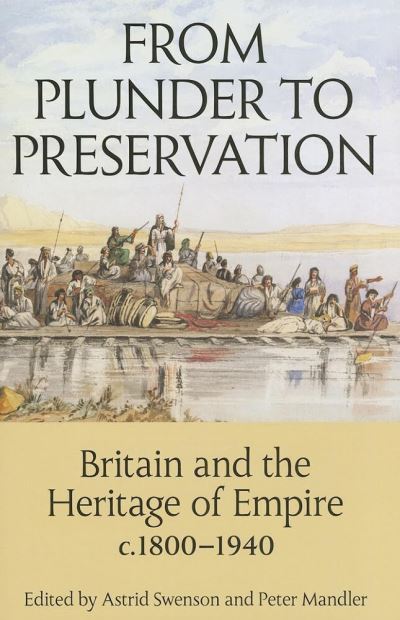
What was the effect of the British Empire on the cultures and civilisations of the peoples over whom it ruled? This book takes a novel approach to this important and controversial subject by considering the impact of empire on the idea of 'heritage'. It reveals a dazzling variety of attitudes on the part of the imperialists - from frank 'plunder' of American, Asian, African and Pacific peoples' cultural artefacts and monuments to a growing appreciation of the need for 'preservation' of the world's heritage in the places it originated.
But it goes beyond the empire-centred view to consider how far colonised peoples themselves were able to embed indigenous understandings of their heritage in the empire, and how indeed the empire was very often dependent on indigenous knowledge for its own functioning. This book will therefore appeal to those interested in the history of the British Empire in all parts of the world, and also to the burgeoning audience for writing on 'world heritage' - the movement pioneered by UNESCO to move beyond a Eurocentric idea of heritage and to identify cultural value in all of the historical productions of the world's peoples.
Its case studies and unusual illustrations range from an extraordinary Anglo-African cathedral in the Sudan to palm leaf manuscripts in Sri Lanka, from Mayan and Indian temples to Shakespeare's Birthplace and Hadrian's Wall. Together they provide a vivid story of how our current understanding of the diverse heritages of world history was forged in the crucible of the British Empire. What was the effect of the British Empire on the cultures and civilizations of the peoples over whom it ruled?
This book takes a novel approach to this important and controversial subject by considering the impact of empire on the idea of 'heritage'. It reveals a dazzling variety of attitudes on the part of the imperialists - from frank 'plunder' of American, Asian, African and Pacific peoples' cultural artefacts and monuments to a growing appreciation of the need for 'preservation' of the world's heritage in the places it originated.
But it goes beyond the empire-centred view to consider how far colonized peoples themselves were able to embed indigenous understandings of their heritage in the empire, and how indeed the empire was very often dependent on indigenous knowledge for its own functioning. This book will therefore appeal to those interested in the history of the British Empire in all parts of the world, and also to the burgeoning audience for writing on 'world heritage' - the movement pioneered by UNESCO to move beyond a Eurocentric idea of heritage and to identify cultural value in all of the historical productions of the world's peoples.
Its case studies and unusual illustrations range from an extraordinary Anglo-African cathedral in the Sudan to palm leaf manuscripts in Sri Lanka, from Mayan and Indian temples to Shakespeare's Birthplace and Hadrian's Wall. Together they provide a vivid story of how our current understanding of the diverse heritages of world history was forged in the crucible of the British Empire.
| ISBN: | 9780197265413 |
| Publication date: | 30th May 2013 |
| Author: | British Academy |
| Publisher: | Oxford University Press an imprint of OUP OXFORD |
| Format: | Hardback |
| Pagination: | 400 pages |
| Series: | Proceedings of the British Academy |
| Genres: |
European history Colonialism and imperialism Archaeology by period / region |
What was the effect of the British Empire on the cultures and civilisations of the peoples over whom it ruled? This book takes a novel approach to this important and controversial subject by considering the impact of empire on the idea of 'heritage'.
From Plunder to Preservation features in the following genres: European history, Colonialism and imperialism, Archaeology by period / region
Hardback. Not Available.
From Plunder to Preservation was written by British Academy and published by Oxford University Press an imprint of OUP OXFORD
From Plunder to Preservation has 400 pages
Yes it is part of Proceedings of the British Academy series