

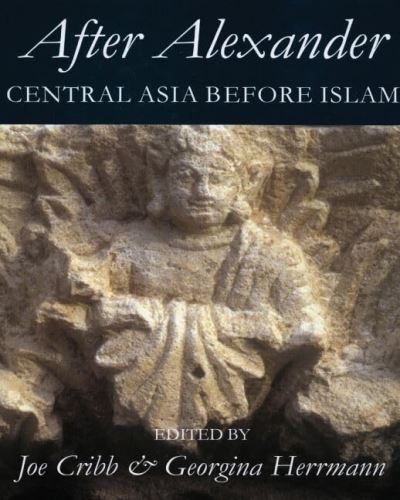
This is a new study of the history, archaeology and numismatics of Central Asia, an area of great significance for our understanding of the ancient and early medieval world. This vast, land-locked region, with its extreme continental climate, was a centre of civilization with great metropolises. Its cosmopolitan population followed different religions (Zoroastrianism, Christianity, Buddhism), and traded extensively with China, India, the Middle East, and Europe. The millennium from the overthrow of the first world empire of Achaemenian Persians by Alexander the Great to the arrival of the Arabs and Islam was a period of considerable change and conflict.
The volume focuses on recent investigations in Uzbekistan and Turkmenistan. It provides a complex analysis of the symbiosis between the city life based on oases, and the nomadic peoples grazing their animals in the surrounding semi-deserts. Other topics include the influence of the Greek colonists on military architecture, and the major impact of the Great Kushans on the spread of Buddhism and on the development of the Central Asian metropolis.
And although written documents rarely survive, coinage has provided essential evidence for the political and cultural history of the region.
These essays will be of interest to the scholar, the student, and the armchair traveller
| ISBN: | 9780197263846 |
| Publication date: | 26th July 2007 |
| Author: | Joe Cribb, Georgina Herrmann |
| Publisher: | The British Academy an imprint of Liverpool University Press |
| Format: | Hardback |
| Pagination: | 514 pages |
| Series: | Proceedings of the British Academy |
| Genres: |
Asian history Archaeology by period / region Collecting coins, banknotes, medals and other related items Ancient history |
This is a new study of the history, archaeology and numismatics of Central Asia, an area of great significance for our understanding of the ancient and early medieval world. This vast, land-locked region, with its extreme continental climate, was a centre of civilization with great metropolises.
After Alexander features in the following genres: Asian history, Archaeology by period / region, Collecting coins, banknotes, medals and other related items, Ancient history
Hardback. £110.00. Not Available.
After Alexander was written by Joe Cribb, Georgina Herrmann and published by The British Academy an imprint of Liverpool University Press
After Alexander has 514 pages
Yes it is part of Proceedings of the British Academy series
£110.00. Not Available.