

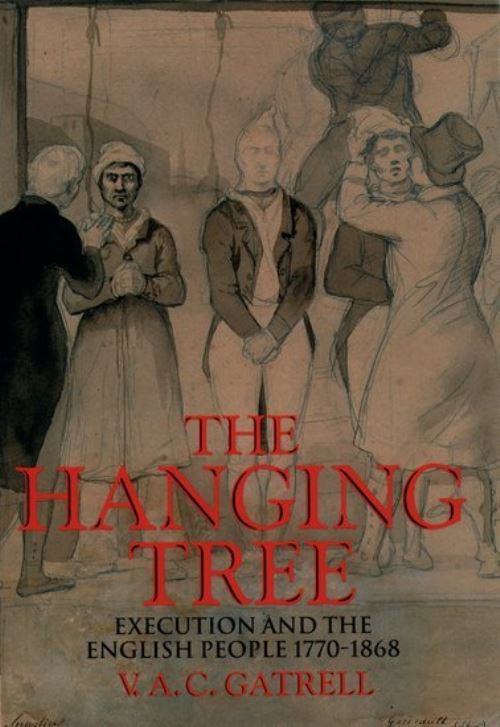
Hanging people for small crimes as well as grave, the Bloody Penal Code was at its most active between 1770 and 1830. In those years some 7,000 men and women were executed on public scaffolds, watched by thousands. Hanging was confined to murderers thereafter, but these were still killed in public until 1868.
Clearly the gallows loomed over much of social life in this period. But how did those who watched, read about, or ordered these strangulations feel about the terror and suffering inflicted in the law's name? What kind of justice was delivered, and how did it change?
This book is the first to explore what a wide range of people felt about these ceremonies (rather than what a few famous men thought and wrote about them). A history of mentalities, emotions, and attitudes rather than of policies and ideas, it analyses responses to the scaffold at all social levels:
| ISBN: | 9780192853325 |
| Publication date: | 17th October 1996 |
| Author: | Vic Gatrell |
| Publisher: | Oxford University Press an imprint of OUP OXFORD |
| Format: | Paperback |
| Pagination: | 634 pages |
| Genres: |
History and Archaeology Social and cultural history Cultural studies Penology and punishment |
Hanging people for small crimes as well as grave, the Bloody Penal Code was at its most active between 1770 and 1830. In those years some 7,000 men and women were executed on public scaffolds, watched by thousands.
The Hanging Tree features in the following genres: History and Archaeology, Social and cultural history, Cultural studies, Penology and punishment
Paperback. £92.25, down from the £102.50 cover price. Not Available.
The Hanging Tree was written by Vic Gatrell and published by Oxford University Press an imprint of OUP OXFORD
The Hanging Tree has 634 pages
£92.25, reduced from £102.50. Not Available.