

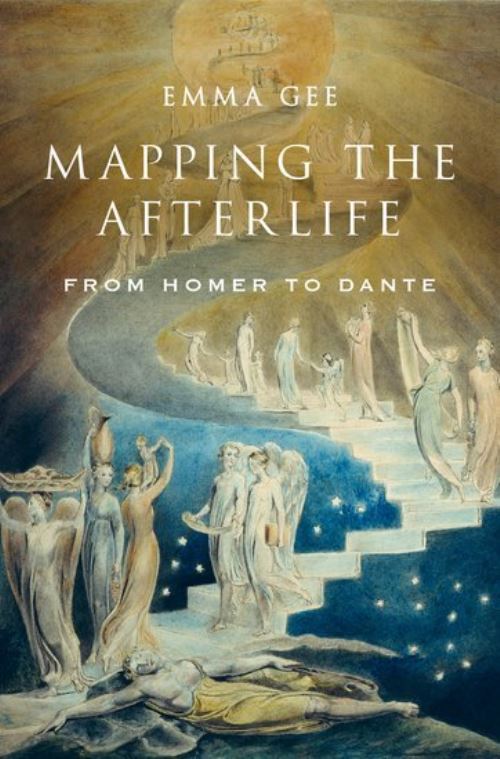
There are very few accounts of the afterlife across the period from Homer to Dante. Most traditional studies approach the classical afterlife from the point of view of its "evolution" towards the Christian afterlife. This book tries to do something different: to explore afterlife narratives in spatial terms and to situate this tradition within the ambit of a fundamental need in human psychology for the synthesis of soul (or "self") and universe.
Drawing on the works of Homer, Plato, Cicero, Virgil, and Dante, among others, as well as on modern works on psychology, cartography, and music theory, Mapping the Afterlife argues that the topography of the afterlife in the Greek and Roman tradition, and in Dante, reflects the state of "scientific" knowledge at the time of the various contexts in which we find it. The book posits that there is a dominant spatial idiom in afterlife landscapes, a "journey-vision paradigm"--the horizontal journey of the soul across the afterlife landscape, and a synoptic vision of the universe.
Many scholars have argued that the vision of the universe is out of place in the underworld landscape. However, looking across the entire tradition, we find that afterlife landscapes, almost without exception, contain these two kinds of space in one form or another. This double vision of space brings the underworld, as the landscape of the soul, into contact with the "scientific" universe; and brings humanity into line with the cosmos.
| ISBN: | 9780190670481 |
| Publication date: | 22nd June 2020 |
| Author: | Emma Gee |
| Publisher: | Oxford University Press an imprint of OUP USA |
| Format: | Hardback |
| Pagination: | 384 pages |
| Genres: |
Literary studies: ancient, classical and medieval Folklore studies / Study of myth (mythology) Ancient Greek and Roman philosophy Philosophy: metaphysics and ontology Ancient religions and Mythologies |
There are very few accounts of the afterlife across the period from Homer to Dante. Most traditional studies approach the classical afterlife from the point of view of its "evolution" towards the Christian afterlife.
Mapping the Afterlife features in the following genres: Literary studies: ancient, classical and medieval, Folklore studies / Study of myth (mythology), Ancient Greek and Roman philosophy, Philosophy: metaphysics and ontology, Ancient religions and Mythologies
Hardback, Ebook. £99.00, down from the £110.00 cover price. Not Available.
Mapping the Afterlife was written by Emma Gee and published by Oxford University Press an imprint of OUP USA
Mapping the Afterlife has 384 pages
£99.00, reduced from £110.00. Not Available.