

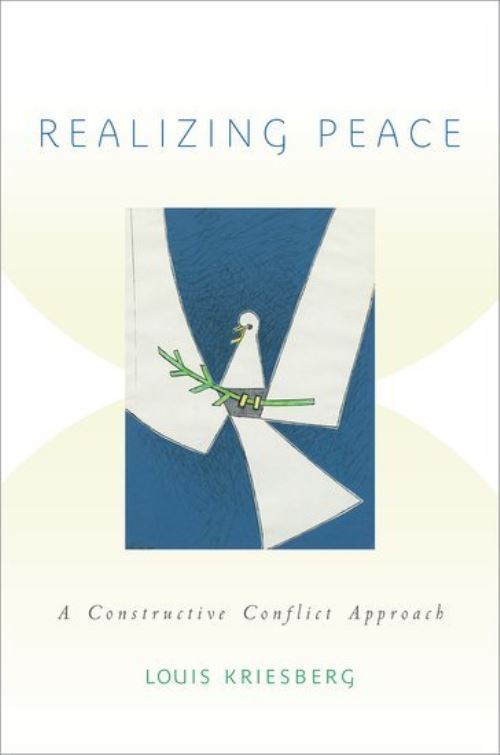
Early work in conflict resolution and peace research focused on why wars broke out, why they persisted, and why peace agreements failed to endure. Later research has focused on what actions and circumstances have actually averted destructive escalations, stopped the perpetuation of destructive conduct, produced a relatively good conflict transformation, or resulted in an enduring and relatively equitable relationship among former adversaries.
This later research, which began in the 1950s, recognizes that conflict is inevitable and is often waged in the name of rectifying injustice. Additionally, it argues that damages can be minimized and gains maximized for various stakeholders in waging and settling conflicts. This theory, which is known as the constructive conflict approach, looks at how conflicts can be waged and resolved so they are broadly beneficial rather than mutually destructive.
In this book, Louis Kriesberg, one of the major figures in the school of constructive conflict, looks at every major foreign conflict episode in which the United States has been involved since the onset of the Cold War to analyze when American involvement in foreign conflicts has been relatively effective and beneficial and when it has not. In doing so he analyzes whether the US took constructive approaches to conflict and whether the approach yielded better consequences than more traditional coercive approaches.
Realizing Peace helps readers interested in engaging or learning about foreign policy to better understand what has happened in past American involvement in foreign conflicts, to think freshly about better alternatives, and to act in support of more constructive strategies in the future.
| ISBN: | 9780190228675 |
| Publication date: | 16th April 2015 |
| Author: | Louis Kriesberg |
| Publisher: | Oxford University Press an imprint of OUP USA |
| Format: | Paperback |
| Pagination: | 400 pages |
| Genres: |
International relations Military history Warfare and defence |
Early work in conflict resolution and peace research focused on why wars broke out, why they persisted, and why peace agreements failed to endure. Later research has focused on what actions and circumstances have actually averted destructive escalations, stopped the perpetuation of destructive conduct, produced a relatively good conflict transformation, or resulted in an enduring and relatively equitable relationship among former adversaries.
Realizing Peace features in the following genres: International relations, Military history, Warfare and defence
Paperback, Ebook. £44.99, down from the £49.99 cover price. Not Available.
Realizing Peace was written by Louis Kriesberg and published by Oxford University Press an imprint of OUP USA
Realizing Peace has 400 pages
£44.99, reduced from £49.99. Not Available.