

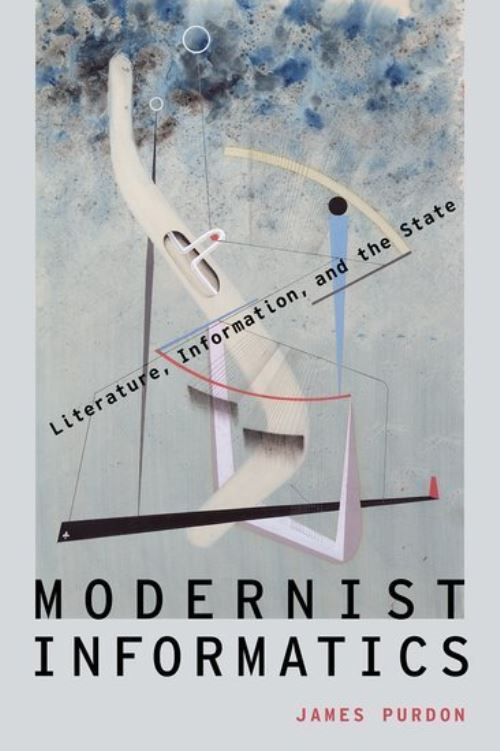
Between steam and cybernetics lies a missing phase in the history of information culture. Beginning in the late nineteenth century, national governments and writers of fiction alike began to take an interest in information not simply as fact, nor yet as effortlessly transmissible data, but as an unusual and destabilizing new phenomenon. For some writers, such as Joseph Conrad and Walter Benjamin, 'information' came to represent not effortless transmissibility, but rather an interruption of meaningful communication.
For others - such as Elizabeth Bowen - such interruptions were themselves ways of making new kinds of meaning. The attempt to reimagine and redefine information produced a range of new informatic phenomena dedicated to its control:
| ISBN: | 9780190211691 |
| Publication date: | 7th January 2016 |
| Author: | James Purdon |
| Publisher: | Oxford University Press an imprint of OUP USA |
| Format: | Hardback |
| Pagination: | 242 pages |
| Series: | Modernist Literature & Culture |
| Genres: |
Literary studies: c 1900 to c 2000 Media studies Communication studies |
Between steam and cybernetics lies a missing phase in the history of information culture. Beginning in the late nineteenth century, national governments and writers of fiction alike began to take an interest in information not simply as fact, nor yet as effortlessly transmissible data, but as an unusual and destabilizing new phenomenon.
Modernist Informatics features in the following genres: Literary studies: c 1900 to c 2000, Media studies, Communication studies
Hardback, Ebook. £82.80, down from the £92.00 cover price. Not Available.
Modernist Informatics was written by James Purdon and published by Oxford University Press an imprint of OUP USA
Modernist Informatics has 242 pages
Yes it is part of Modernist Literature & Culture series
£82.80, reduced from £92.00. Not Available.