

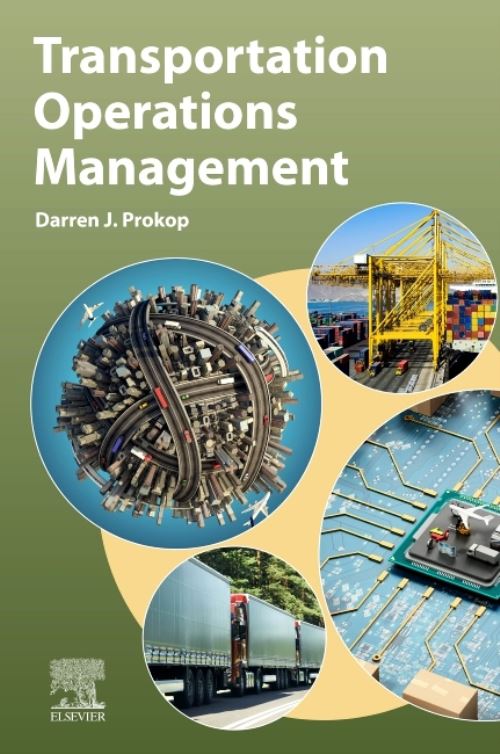
Transportation Operations Management provides the analytical tools and industry-wide context necessary to understand and address the critical real-world problems in transportation operations and planning that shippers, carriers, and third-party logistics providers face every day.
The book examines operational problems from all transportation modes-air, motor carrier, water vessel, pipeline, and rail-to show how these interact in the real world of today's carriers and shippers. The book also outlines and analyzes key issues such as designing efficient domestic and international transportation networks; choosing optimal locations within market spaces; designing infrastructure to manage network congestion; leveraging intermodalism for operational flexibility; leveraging techniques for costing, pricing, and revenue management; using tracking technology for decisionmaking; maintaining regulatory compliance in operations; and managing environmental stewardship.
Paying particular attention to the influence of the logistical constraints of time, physical space, and location, the book reveals the key role of transportation in strategic and tactical decision-making. The book uses mathematical techniques such as the theory of capacity management, the microeconomics of costing and pricing, risk management, linear optimization, productivity measurement, queueing theory, and complex scheduling. The book also uses real-world problems with their actual marketplace constraints in technology, geography, and government regulations to provide an applied context to the techniques examined.
| ISBN: | 9780128154151 |
| Publication date: | 14th March 2022 |
| Author: | Darren Prokop |
| Publisher: | Elsevier an imprint of Elsevier Science |
| Format: | Paperback |
| Pagination: | 344 pages |
| Genres: |
Transport law |
Transportation Operations Management provides the analytical tools and industry-wide context necessary to understand and address the critical real-world problems in transportation operations and planning that shippers, carriers, and third-party logistics providers face every day.The book examines operational problems from all transportation modes-air, motor carrier, water vessel, pipeline, and rail-to show how these interact in the real world of today's carriers and shippers. The book also outlines and analyzes key issues such as designing efficient domestic and international transportation networks; choosing optimal locations within market spaces; designing infrastructure to manage network congestion; leveraging intermodalism for operational flexibility; leveraging techniques for costing, pricing, and revenue management; using tracking technology for decisionmaking; maintaining regulatory compliance in operations; and managing environmental stewardship.Paying particular attention to the influence of the logistical constraints of time, physical space, and location, the book reveals the key role of transportation in strategic and tactical decision-making.
Transportation Operations Management features in the following genres: Transport law
Paperback. £88.19, down from the £97.99 cover price. Not Available.
Transportation Operations Management was written by Darren Prokop and published by Elsevier an imprint of Elsevier Science
Transportation Operations Management has 344 pages
£88.19, reduced from £97.99. Not Available.