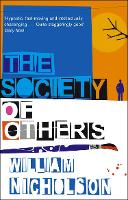
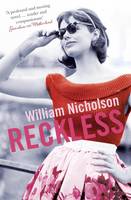
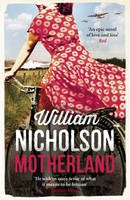
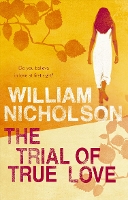
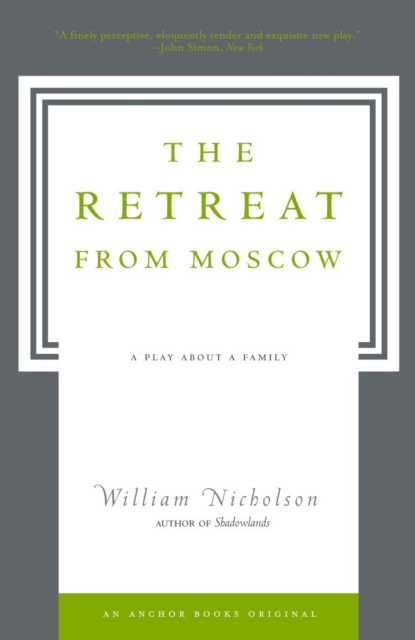
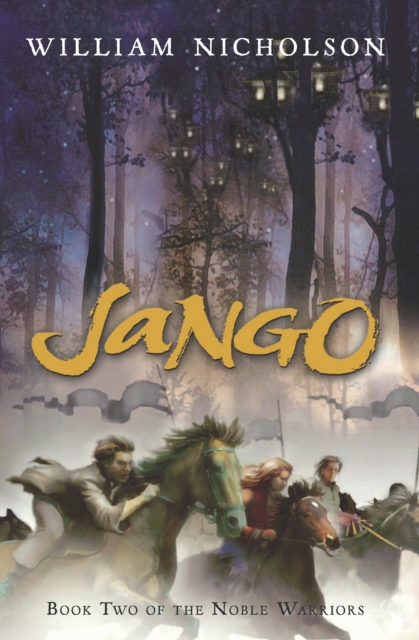
William Nicholson was born in 1948, and grew up in Sussex and Gloucestershire. He was educated at Downside School and Christ's College, Cambridge, and then joined BBC Television, where he worked as a documentary film maker. There his ambition to write, directed first into novels, was channelled into television drama. His plays for television include Shadowlands and Life Story, both of which won the BAFTA Best Television Drama award in their year; other award-winners were Sweet As You Are and The March. In 1988 he received the Royal Television Society's Writer's Award. His first play, an adaptation of Shadowlands for the stage, was Evening Standard Best Play of 1990, and went on to a Tony-award winning run on Broadway. He was nominated for an Oscar for the screenplay of the film version, which was directed by Richard Attenborough and starred Anthony Hopkins and Debra Winger. Since then he has written more films - Sarafina, Nell, First Knight, Grey Owl, and Gladiator (as co-writer), for which he received a second Oscar nomination. He has written and directed his own film, Firelight; and three further stage plays, Map of the Heart, Katherine Howard and The Retreat from Moscow. His novel for older children, The Wind Singer, won the Smarties Prize Gold Award on publication in 2000, and the Blue Peter Book of the Year Award in 2001. Its sequel, Slaves of the Mastery, was published in May 2001, and the final volume in the Wind on Fire trilogy, Firesong was published in May 2002. A further epic trilogy – Noble Warriors – has seen been published to much acclaim and began with The Seeker, continued with Jango and culminates in Noman. He lives in Sussex with his wife Virginia and their three children.
Q&A
Where do you get your ideas?
There’s where, and there’s how. Where is easy to answer. The material that forms my ideas comes from my life, from the people round me, from the books I read, and more than I sometimes realise, from newspapers and magazines. I pick up a lot of strange stuff from news reports. Also of course, travel opens the mind to other ways of doing things, and I have travelled a lot in my life.
But then, when you have such a vast mass of trivia lodged somewhere in the memory, how do you pull out the bits you need at the time you need them?
I find the answer is day-dreaming. Often I know what I want to happen next, but not how or where it will happen. For example, I might know I want my hero to face a terrible danger - but what danger? So I let myself daydream. I let the situation float about in my head for a while, sometimes for days. Then along comes some random thought that goes click! and connects. It’s not quite as random as it seems. By preparing, by being ready, the useful idea has somewhere to go when it comes along. I think it’s important not to force this process; and equally important to be willing to make changes later, when a better idea surfaces. Finally, there’s something about this having-ideas game that people often forget to mention: it’s blissfully satisfying.
What inspired you to write ‘The Wind Singer, your first novel for teenagers’?
There were two spurs to writing the first book. One was simply a desire to write something for myself, not for a film production company, in which I could make anything happen – anything at all. I wanted the fun of invention, of story-telling my way. The second spur was an irritation with the amount of tests my children were put through at school. I don’t like or value exams, and I hate to see the way children are being judged by their performance at these strange rituals. So I invented a world that took the obsession with exams to its logical extreme, and started writing. Then of course, the story went off in unexpected directions. And that’s the fun of writing. Who is your favourite character? I love all my characters, of course, but I have a way of loving best the ones I've been writing most recently. So that means I love Seeker, Morning Star and the Wildman most right now.
How do you come up with the names of your characters?
I take a lot of trouble over names. Often I’ll change a character’s name several times during the writing of the book, until it settles down and feels right. The meaning of the name, or the associations of the sound, have to connect with the character – so Kestrel is fast and dangerous and beautiful, like the hawk, and Mumpo is mumbly and pooey, at least to start with. Also I try to give people from the same group similar names. All the Manth people have names ending in –th or –ch or –sh, and all the mud people have names ending in –um. This is very much what happens in the real world.
How long does it take you to write your books?
It all depends how many other things I’m writing at the same time – I also write film scripts, and plays – but in general, a book takes me about a year to finish. Have you always wanted to be a writer? Yes, I have. Even as a child of five I was trying to write books. But it’s taken another forty-five years to get anyone to publish them.
Did you know The Wind Singer would be part of a trilogy?
When I started writing The Wind Singer, I thought of it as one book. I didn’t know if anyone would like it or want to publish it. Then when it was accepted by a publisher, I realised there were many unanswered questions in the story. So then I planned the other two books. Are your characters based on real people? None of my characters are direct portraits of real people, but nothing comes from nowhere, so of course there are characteristics in them from people I know. The person I use most in creating characters is myself. I have many different types of people inside me – so do you – so does everybody. I’m shy and I’m confident. I’m gorgeous and I’m hideous. I’m young and I’m old. I’m male and I’m female, and sometimes I’m a cow or a pig. It’s all there if you look for it.
What tips would you give someone starting out as a writer?
If you want to write books, you have to do two things: read books, and write. It sounds obvious, but only by writing a lot will you get any good. The better the books you read, the better your own writing will be. Then it’s just a matter of keeping on writing. You won’t get good by giving up. I was useless for a long time, but slowly I got better. You can do it too. If you feel strong enough, show your work to others, and listen to their criticisms. It hurts - but if you listen, you'll get better.
What is your favourite book by another author?
War and Peace by Leo Tolstoy.
Author's Website: https://www.williamnicholson.co.uk/05/index.asp
Follow William Nicholson on Social Media