

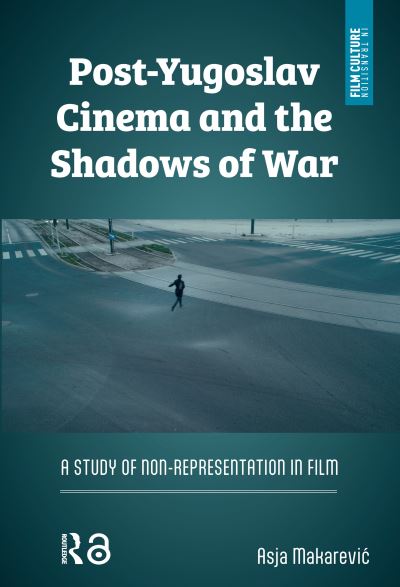
Bosnia-Herzegovina is still considered a post-war country. The concept of post-war implies that the country and its people are tied more strongly to the past than they are oriented towards the future. Paradoxically, as long as the future is kept at bay and the post-war condition kept alive, Bosnia maintains a certain significance on the global scene.
However, living in the temporal vacuum of the post-war condition cannot be a long-term perspective. A range of post-Yugoslav films provides spectators with images that offer innovative approaches to the collective past, while simultaneously reframing contemporary experience. This study proposes to call non-representational images appears to offer a more dynamic relationship to the past and the present, while reflecting complex processes of the formation of identity, memory, guilt, and responsibility.
But if these dynamics are inherent in non-representational images, is there a way in which they can contribute to overcoming the post-war condition?
| ISBN: | 9781041184591 |
| Publication date: | 24th November 2026 |
| Author: | Asja MakareviÔc |
| Publisher: | Routledge an imprint of Taylor & Francis |
| Format: | Paperback |
| Pagination: | 240 pages |
| Series: | Film Culture in Transition |
| Genres: |
Film history, theory or criticism Cultural studies |
Bosnia-Herzegovina is still considered a post-war country. The concept of post-war implies that the country and its people are tied more strongly to the past than they are oriented towards the future.
Post-Yugoslav Cinema and the Shadows of War features in the following genres: Film history, theory or criticism, Cultural studies
Paperback. £43.19, down from the £47.99 cover price. Not Available.
Post-Yugoslav Cinema and the Shadows of War was written by Asja MakareviÔc and published by Routledge an imprint of Taylor & Francis
Post-Yugoslav Cinema and the Shadows of War has 240 pages
Yes it is part of Film Culture in Transition series
£43.19, reduced from £47.99. Not Available.