LoveReading Says
Winner of the Man Booker Prize 2011.
Shortlisted for the Galaxy UK Author of the Year Award 2011.
Shortlisted for the Costa Novel Award 2011.
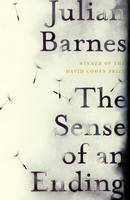
Tony Webster and his clique first met Adrian Finn at school. Sex-hungry and book-hungry, they would navigate the girl-less sixth form together, trading in affectations, in-jokes, rumour and wit. They all swore to stay friends for life. Now Tony is in middle age. He’s had a career and a single marriage, a calm divorce. He’s certainly never tried to hurt anybody. Memory, though, is imperfect. It can always throw up surprises, as a lawyer’s letter is about to prove. The Sense of an Ending is the story of one man coming to terms with the mutable past. Laced with trademark precision, dexterity and insight, it is the work of one of the world’s most distinguished writers.
LoveReading
Find This Book In
Julian Barnes Press Reviews
Barnes is on absolutely top form here. His sentences, each one so simple and precise, are as iridescent as tropical fish, each one individual and distinct, each one expressing a single revelatory insight, thought, image or joke, and yet they work together to produce a perfectly wonderful harmonious shoal, a work of rare and dazzling genius. The Daily Telegraph
Barnes’s humour never sneers at his characters. As Veronica reads Stefan Zweig in a John Lewis café, as Tony initiates a heated discussion about the precise definition of “hand-cut chips”, it seems that their creator is on their side, extremely fond of words and ideas, a pedant and proud of it ... What is so impressive in Barnes’s fiction is his ability to evoke the chaos and vulnerability that beleaguer human life, while remaining calm and lucid in the face of both. He seems a modern-day Stoic. The Times
With its patterns and repetitions, scrutinising its own workings from every possible angle, the novella becomes a highly wrought meditation on ageing, memory and regret. But it gives as much resonance to what is unknown and unspoken – lost to memory – as it does to the engine of its own plot. The Guardian
 Want to know what the critics made of this book The Omnivore rounds up newspaper reviews, bringing you a cross section of intelligent opinion.
About Julian Barnes
Julian Barnes is the author of eleven novels, including The Sense of an Ending, Metroland, Flaubert's Parrot, A History of the World in 10½ Chapters and Arthur & George; three books of short stories, Cross Channel, The Lemon Table and Pulse; and also three collections of journalism, Letters from London, Something to Declare, and The Pedant in the Kitchen.
His work has been translated into more than thirty languages. In France he is the only writer to have won both the Prix Médicis (for Flaubert's Parrot) and the Prix Femina (for Talking it Over). He was awarded the Austrian State Prize for European Literature in 2004, the David Cohen Prize for Literature and the Man Booker Prize for Fiction in 2011. He lives in London.
More About Julian Barnes